The task scam: why a part-time job that pays you to like videos is a trap
It pays you a little first, then asks you to pay a lot
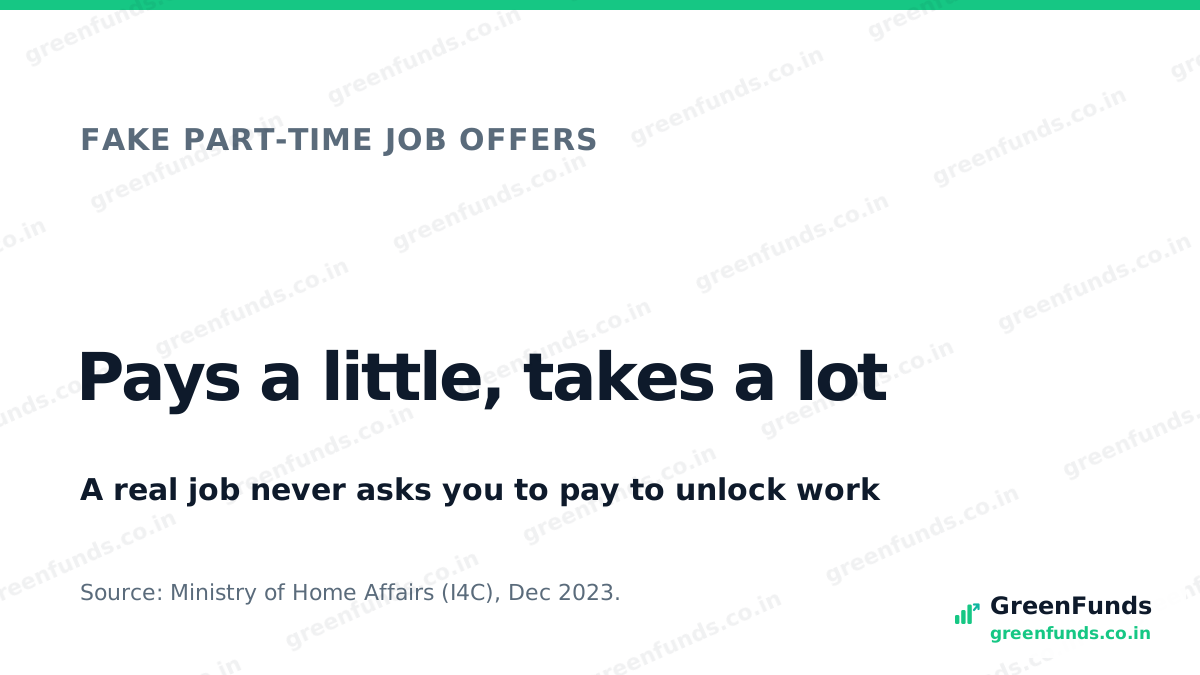
A task scam is a fake part-time job. Someone offers you easy money for tiny online jobs, like liking videos or giving a hotel five stars. They pay you a little at first, so it feels real. Then they ask you to put in your own money to unlock bigger tasks, and that money is gone.
How the hook works. It usually starts with a message you never asked for, or an ad promising work from home. A “coordinator” moves you to WhatsApp or Telegram and gives you simple tasks. You do them, and a few hundred rupees really lands in your account. That small payout is the whole trick. It buys your trust.
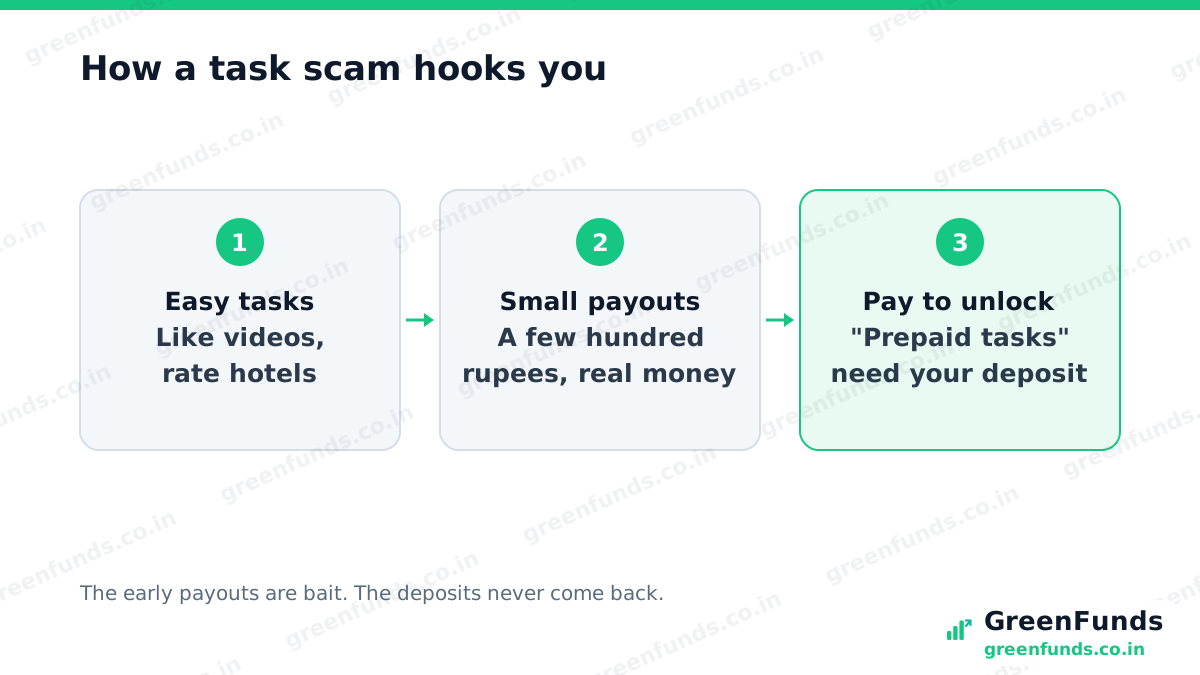
Then comes the “prepaid task”. Next you are told the better tasks need a deposit. Say you put in Rs 5,000 and the app shows Rs 7,000 earned. To withdraw, you are told to finish one more task, for Rs 20,000. Then a “tax”, then a “fee”. The numbers on the screen keep growing. None of it can be taken out. (The amounts here are an illustration of the pattern.)
Did you know? In December 2023, the Ministry of Home Affairs said its cybercrime coordination centre, I4C, had flagged over 100 websites running organised investment and task-based part-time job frauds, and they were blocked under the IT Act. Per the ministry, victims were asked to do tasks like video likes and map ratings, and the money was moved through mule and rented bank accounts. Source: Ministry of Home Affairs release, pib.gov.in. Check the latest alerts there.
The second trap: your own bank account. Some versions ask you to receive money and pass it on, for a “commission”. Don’t. That turns your account into a money mule account for stolen money. The account can be frozen, and you can be the one the police come to first.
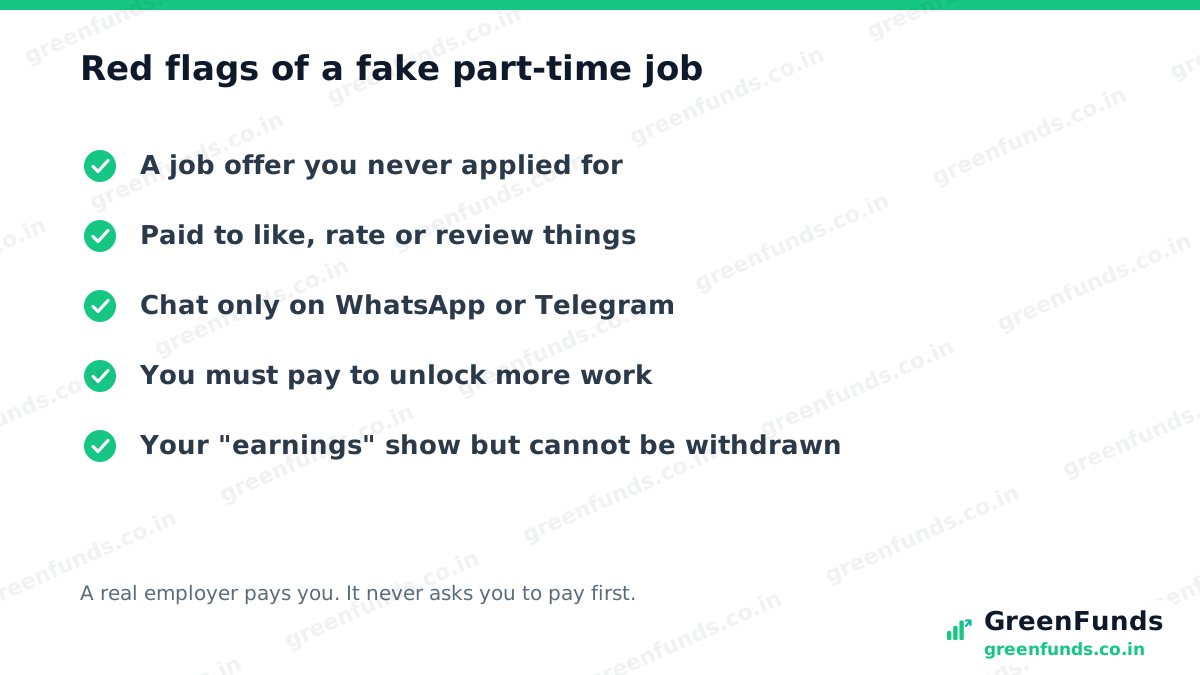
The one rule. A real job pays you. It never asks you to pay first. The moment a job wants a deposit, a “registration fee” or money to “unlock” work, you are looking at a scam, however friendly the coordinator seems. It is the same logic as a Ponzi scheme: early money from the scammer is just the cost of hooking you.
If you have already paid. Stop paying, even if they promise the next payment releases everything. Call the 1930 cyber fraud helpline and file at cybercrime.gov.in, the faster the better. Tell your bank. Keep the chats, the UPI IDs you paid and the payment references. Our step-by-step guide on how to report a UPI fraud walks you through it.
The takeaway. Easy money for liking videos is not a job, it is bait. The small payout is there to make you trust the big deposit. Never pay to get paid, and never lend out your bank account.
More on staying safe: common UPI scams, the fake stock-tip group scam, and how to spot a Ponzi scheme.
Questions people ask
What is a task scam?
A task scam is a fake part-time job. You are offered money for simple online tasks, like liking videos or rating hotels on a map. You get paid small amounts at first so it feels genuine. Then you are told to deposit money to unlock bigger, better-paying tasks. Once you deposit, the 'earnings' show on a screen but you can never withdraw them.
Why did they pay me if it is a scam?
The first small payouts are bait. A few hundred rupees convinces you the job is real, so you trust them when they later ask for a deposit of thousands. The money you lose in the deposit stage is far more than anything they paid you.
I already paid into a task scam. What should I do?
Stop paying, even if they say one more payment will release your money. Call 1930, the national cyber fraud helpline, and file a complaint at cybercrime.gov.in as fast as you can. Tell your bank too. Keep screenshots of the chats, the payment IDs and the UPI IDs you paid.
Is it safe to let someone use my bank account for a part-time job?
No. Some of these jobs ask you to receive and forward money through your own account. That makes your account a money mule account for scam money, and it can get your account frozen and land you in a police case.
Source: Ministry of Home Affairs (I4C) release on blocking task-based part-time job fraud websites, December 2023, pib.gov.in; National Cyber Crime Reporting Portal, cybercrime.gov.in. Check the latest advisories.
Found this useful? You can buy us a coffee. It keeps GreenFunds free.Flag a possible issue
Was this helpful?
Thanks for the signal.
Comments
Share your experience or a question. Be kind, stay on topic. This is reader discussion, not financial advice.
No comments yet. Be the first to share.