F&O trading: 9 in 10 lost money, says SEBI's latest study
Most individuals who trade futures and options lose money, year after year
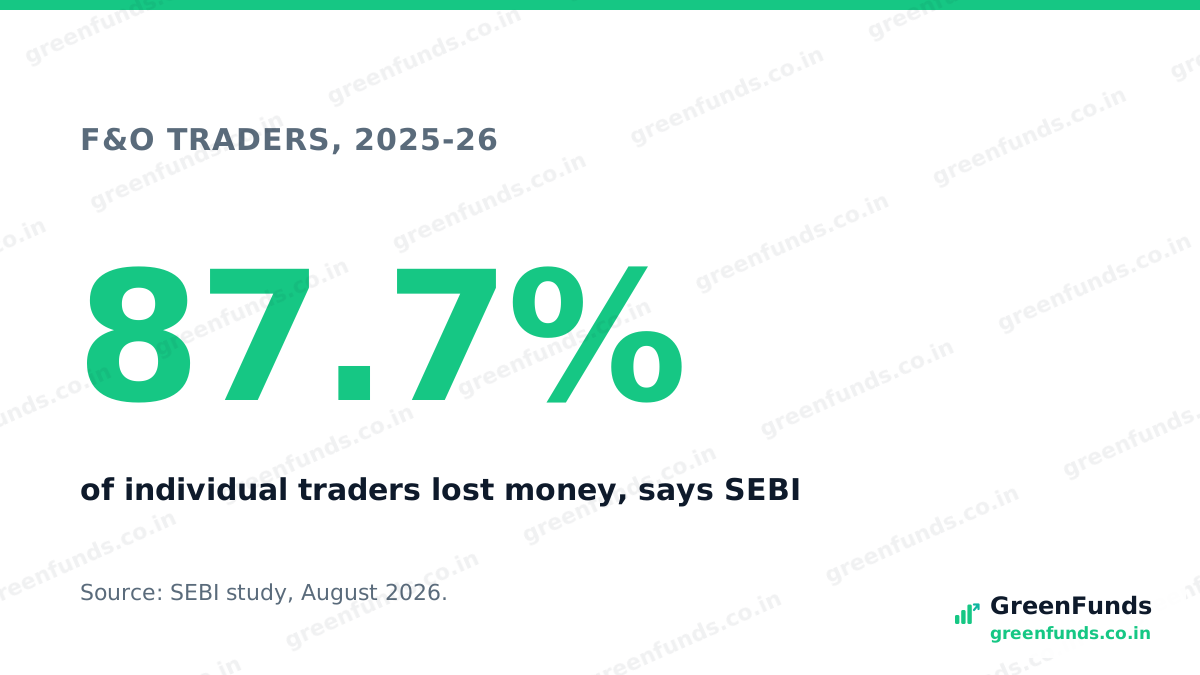
Futures and options, or F&O, are contracts that let you bet on where a share or a market index will go, without buying the share itself. They are a kind of derivative: their value comes from something else. And for individuals, the data is blunt. SEBI’s latest study found that nearly 9 in 10 people who trade them lose money.
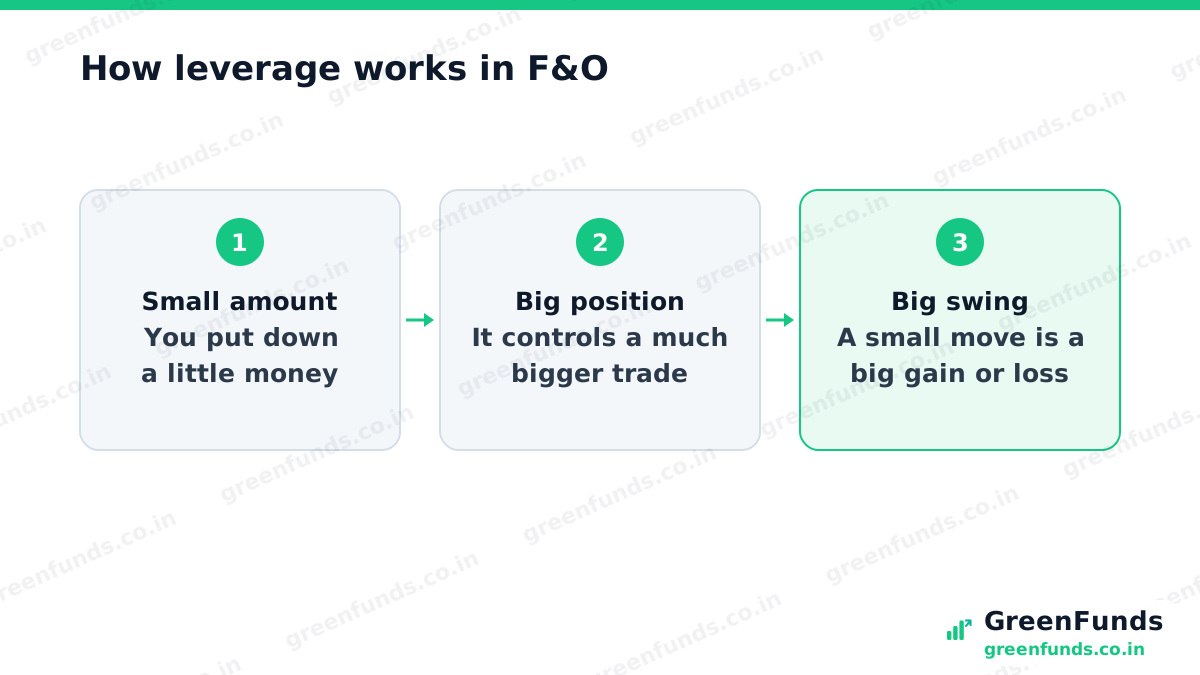
What they are, simply. A future is a deal to buy or sell something at a fixed price on a fixed date. An option is the right, but not the duty, to buy or sell at a fixed price before a date. The catch is leverage: you put down a small amount to control a much bigger position. That magnifies wins, and it magnifies losses just as fast.
What SEBI found. In August 2026, SEBI published a study of individual traders in equity derivatives across FY25 and FY26. The headline numbers for FY26:
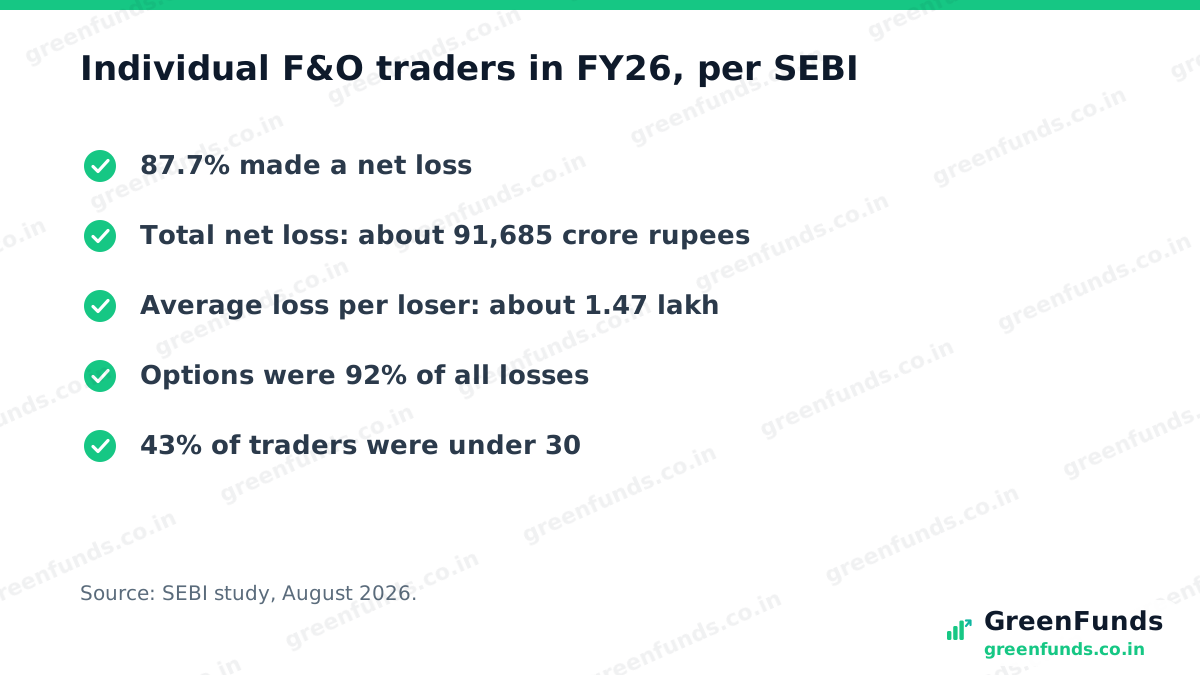
That’s an improvement on FY25, when 90.9% lost money and losses were a revised 1.12 lakh crore rupees. But fewer people trading isn’t the same as people winning: the average loss per trader rose slightly, from 1.13 lakh to 1.17 lakh rupees.
An illustration. Say you buy option contracts for 20,000 rupees, betting the market rises by Friday (made-up numbers). If it doesn’t move enough before expiry, the options can expire worth nothing, and the full 20,000 is gone in a week. That’s the speed at which F&O losses happen.
Did you know? SEBI found that 43% of individual F&O traders in FY26 were under 30, and 89% of them lost money. About three in four traders declared incomes below 5 lakh rupees a year. And individuals paid about 25,000 crore rupees in transaction costs in each of FY25 and FY26, on top of trading losses.
Costs went up too. From 1 April 2026, STT on selling futures rose from 0.02% to 0.05%, and on options premium from 0.10% to 0.15%, per the Budget and NSE. Every trade now costs a little more, which makes winning a little harder.
Why this matters. Many fake “trading tip” groups push people toward options with screenshots of quick profits. If you’re tempted, start with SEBI’s numbers, not the screenshots. Read about fake trading app scams, and understand risk and return first.
The takeaway. F&O are leveraged bets on prices, and SEBI’s data shows 87.7% of individual traders lost money in FY26. The study is public on sebi.gov.in, and new studies may update these numbers, so check the latest one.
More to read: what a share really costs to buy, IPOs explained, and how to spot a Ponzi scheme.
Questions people ask
What are futures and options?
They are derivatives: contracts whose value comes from a share or index. A future is a deal to buy or sell at a set price on a set date. An option gives the right, but not the duty, to buy or sell at a set price. Both let you take a big position with a small amount of money, which magnifies gains and losses.
How many F&O traders lose money?
SEBI's August 2026 study found 87.7% of individual traders in equity derivatives made a net loss in FY26, down from 90.9% in FY25. The average loss among those who lost was about 1.47 lakh rupees.
How much did individual traders lose in F&O?
About 91,685 crore rupees in aggregate net losses in FY26, per SEBI, down from a revised 1.12 lakh crore rupees in FY25. Options accounted for 92% of individual losses.
Do transaction costs add to F&O losses?
Yes. SEBI found individual traders paid about 25,000 crore rupees in transaction costs in each of FY25 and FY26. STT on futures and options was also raised from 1 April 2026.
Source: SEBI, Profitability of Individual Traders in the Equity Derivatives Segment (FY25 to FY26), Department of Economic and Policy Analysis, August 2026 (sebi.gov.in); Finance Act, 2026, section 159 (Gazette of India, 30 March 2026) and NSE circular NSE/FATAX/73524 (STT on futures and options from 1 April 2026).
Found this useful? You can buy us a coffee. It keeps GreenFunds free.Flag a possible issue
Was this helpful?
Thanks for the signal.
Comments
Share your experience or a question. Be kind, stay on topic. This is reader discussion, not financial advice.
No comments yet. Be the first to share.