IPO explained: how to apply, and how shares are allotted
A company sells shares to the public for the first time, and you bid through your bank
An IPO, or initial public offering, is when a company sells its shares to the public for the first time. Anyone with a demat account can apply. A few days later, the shares list on a stock exchange and anyone can buy or sell them.
How you apply. You apply through your broker’s app or your bank’s net banking. You pick how many lots to bid for. A lot is the minimum bundle of shares the company sets, so you apply in multiples of it. Payment works through ASBA, which means your money is blocked, not taken. For bids up to 5 lakh rupees, individuals approve the block with a UPI mandate on their phone, per SEBI rules.
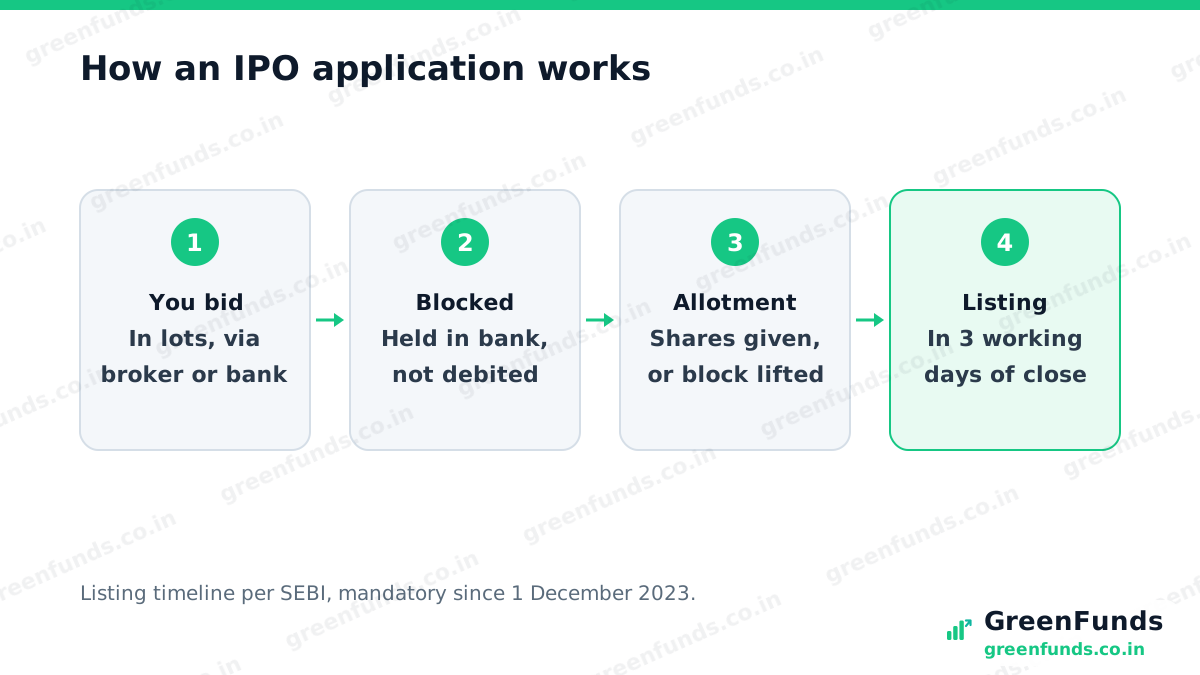
An illustration. Say a lot is 40 shares at 350 rupees each, so one lot costs 14,000 rupees (made-up numbers). You bid for one lot. 14,000 rupees is blocked in your account. If you’re allotted the lot, that amount is debited and 40 shares land in your demat account. If you’re not, the 14,000 rupees is freed.
Allotment, when demand is high. In a popular IPO, people apply for many times the shares on offer. Then not everyone gets shares. A set share of the offer is kept for small investors: SEBI kept this retail portion at 35% of the net offer in 2025. Within that portion, SEBI’s rules aim to give each successful applicant at least one lot, so the most people who can get shares is the retail portion divided by one lot. That’s why most applicants in a heavily oversubscribed issue end up with nothing. The process is called allotment.
Did you know? Since 1 December 2023, SEBI requires shares to list within three working days of an IPO closing. And if you don’t get shares, the blocked money must be released quickly after allotment is finalised, per SEBI’s rules. So an IPO ties up your money for days, not weeks.
The hype trap. Listing-day gains get headlines, and they are exactly what pulls people in. But a share price on day one says nothing about whether the company will grow. Some IPOs list below the offer price. An IPO is still equity, with all the ups and downs that come with it. Read the company’s offer document for the risks it lists, and don’t treat an IPO as a lottery ticket.
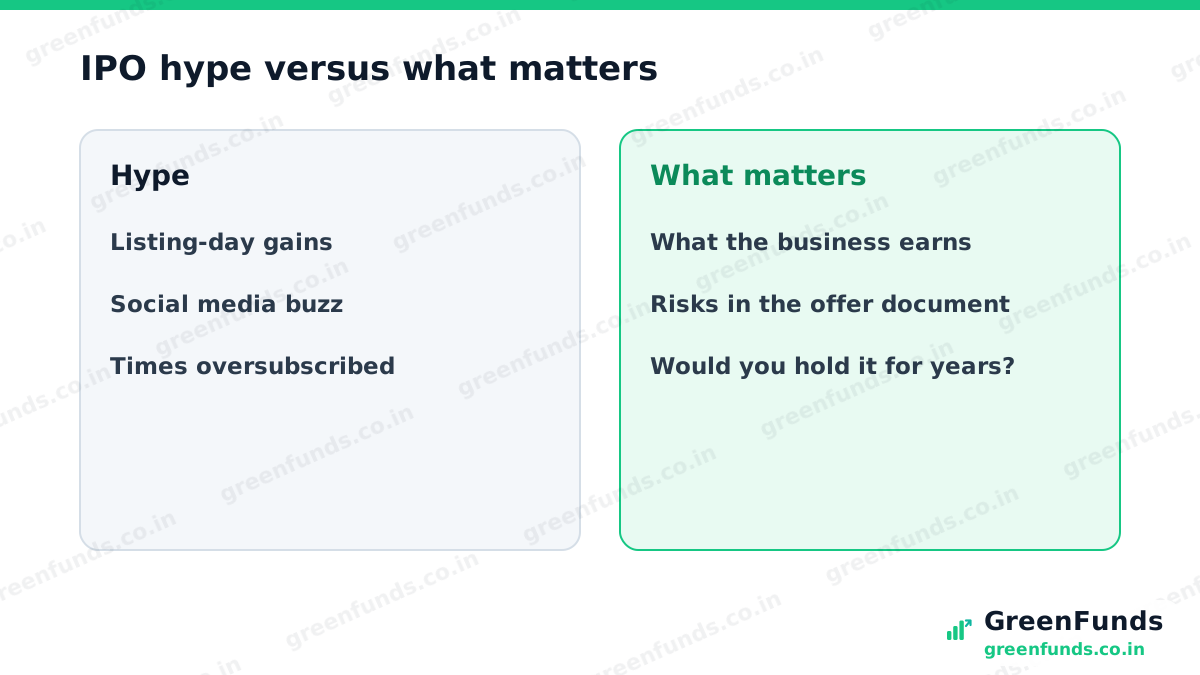
The takeaway. An IPO is a company’s first sale of shares to the public. You bid in lots, your money is only blocked, and shares list within three working days. Allotment is not guaranteed in popular issues, and a listing pop is not a reason to apply.
More to read: what a demat account is, the full cost of buying shares, and splits, bonuses and buybacks.
Questions people ask
What is an IPO?
An IPO, or initial public offering, is when a company sells its shares to the public for the first time. After the offer closes and shares are allotted, the company's shares list on a stock exchange and start trading.
Is my money taken when I apply for an IPO?
No, it is only blocked. Under ASBA, the amount stays in your bank account but is held until allotment. If you get shares, only the amount for those shares is debited. If you don't, the block is lifted.
Why didn't I get shares in an IPO?
Usually because the issue was oversubscribed: far more shares were applied for than were on offer. Then not every applicant can be given shares, and allotment follows SEBI's rules for each investor category. Not getting shares is common in popular IPOs.
How long after an IPO closes do shares list?
Within three working days of the issue closing. SEBI made this listing timeline mandatory from 1 December 2023. Check the current rules, as timelines can be revised.
Source: SEBI Master Circular for ICDR, February 2026, citing SEBI circular SEBI/HO/CFD/TPD1/CIR/P/2023/140 (9 August 2023: listing within 3 working days of issue close, mandatory from 1 December 2023); SEBI circular SEBI/HO/CFD/DIL2/CIR/P/2022/45 (5 April 2022: UPI for individual bids up to 5 lakh rupees) and SEBI's FAQ on UPI in public issues; SEBI board memo, September 2025 (retail portion kept at 35% of the net offer). Check the current SEBI rules.
Found this useful? You can buy us a coffee. It keeps GreenFunds free.Flag a possible issue
Was this helpful?
Thanks for the signal.
Comments
Share your experience or a question. Be kind, stay on topic. This is reader discussion, not financial advice.
No comments yet. Be the first to share.