What is a demat account, and do you actually need one?
It holds shares electronically; not needed for regular mutual funds

A demat account is one of those terms that sounds technical but describes something simple. Just as a bank account holds your money electronically instead of as cash, a demat account holds your shares and other securities electronically instead of as paper certificates. “Demat” is short for dematerialised, meaning turned from paper into electronic form.
What it does. When you buy a share, it lands in your demat account; when you sell, it leaves. No paperwork, no certificates, just an electronic record. This is what makes buying and selling on the stock exchange fast and safe. It is held with a depository, through a broker who acts as your link to it.
The big misconception. Many beginners think they need a demat account to invest in anything. They do not. You need one only for things that trade on the stock exchange.
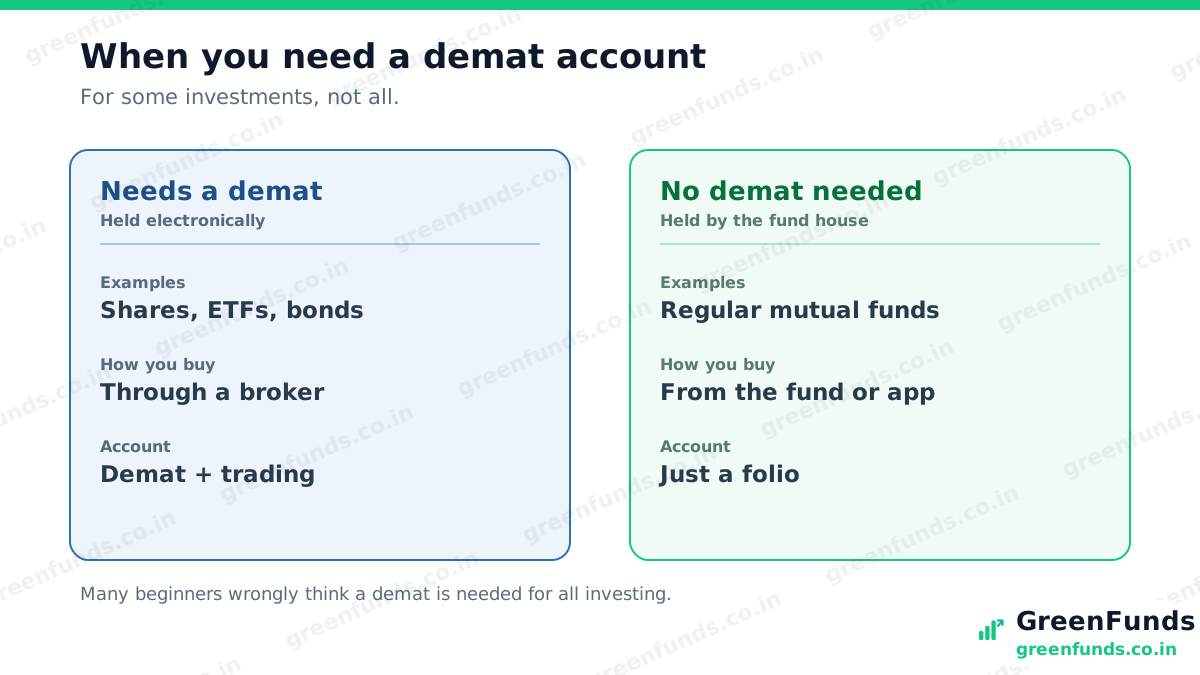
Did you know? You do not need a demat account to invest in regular mutual funds or to run a SIP. The fund house holds your units for you against a folio. A demat is only required for shares, exchange-traded funds (ETFs) and bonds, which trade on the exchange. Knowing this saves beginners from opening accounts they do not yet need.
Demat and trading, the pair. A demat account stores your securities, but it does not place orders. For that you use a trading account, which executes your buy and sell instructions on the exchange. The two work together, and when you open an account with a broker to buy shares, you usually get both.
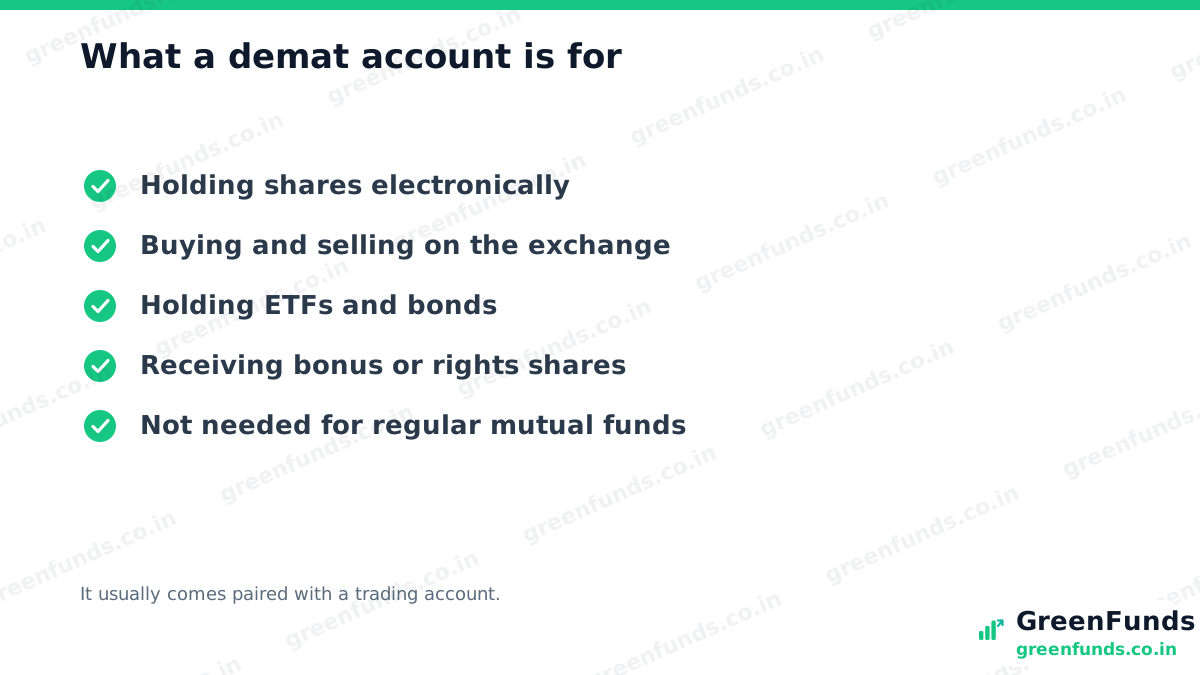
When to open one. Because it mainly serves shares, ETFs and bonds, open a demat account when you actually plan to buy those, not before. Compare brokers on their charges first, such as annual maintenance and transaction fees, since these vary and add up.
The takeaway. A demat account holds your shares and securities electronically, paired with a trading account to buy and sell them. You need it for shares, ETFs and bonds, but not for regular mutual funds. Open one when you are ready to invest in what it is for.
More to read: what the stock market is, what an ETF is, and SIPs and mutual funds.
Questions people ask
What is a demat account?
A demat (dematerialised) account holds your shares and other securities in electronic form, the way a bank account holds your money instead of cash. When you buy a share, it is credited to your demat account; when you sell, it is debited. It removes the need for paper certificates and makes buying and selling on the stock exchange quick and safe.
Do I need a demat account to invest in mutual funds?
No, not for regular mutual funds. You can buy and hold most mutual funds, including through a SIP, without any demat account; the fund house holds your units against a folio. You only need a demat account for shares, exchange-traded funds (ETFs), and bonds, which trade on the stock exchange. Many beginners wrongly think a demat is needed for all investing.
What is the difference between a demat and a trading account?
A demat account holds your securities; a trading account is what you use to place buy and sell orders on the exchange. They work together: the trading account executes the deal, and the demat account stores what you bought. When you open an account with a broker to buy shares, you usually get both.
How do I open a demat account?
You open it through a broker, who acts as a depository participant linking you to a depository. You provide identity and bank details and complete the verification. Compare brokers on their charges, such as annual maintenance and transaction fees, before choosing. Only shares, ETFs and bonds need it, so open one when you actually plan to buy those.
Source: General market structure in India. Demat accounts are held with depositories via a broker (depository participant). Rules and charges vary by provider; verify current terms.
Flag a possible issue
Was this helpful?
Thanks for the signal.
Comments
Share your experience or a question. Be kind, stay on topic. This is reader discussion, not financial advice.
No comments yet. Be the first to share.