Bank locker rules: what the bank owes you if things go missing
The bank's liability is capped at 100 times the yearly locker rent in set cases
A bank locker is a small safe you rent inside a bank’s strong room to keep gold, papers and valuables. You hold the key, the bank guards the room. RBI’s revised rules, in force since 1 January 2022, set what the bank owes you if something goes wrong.
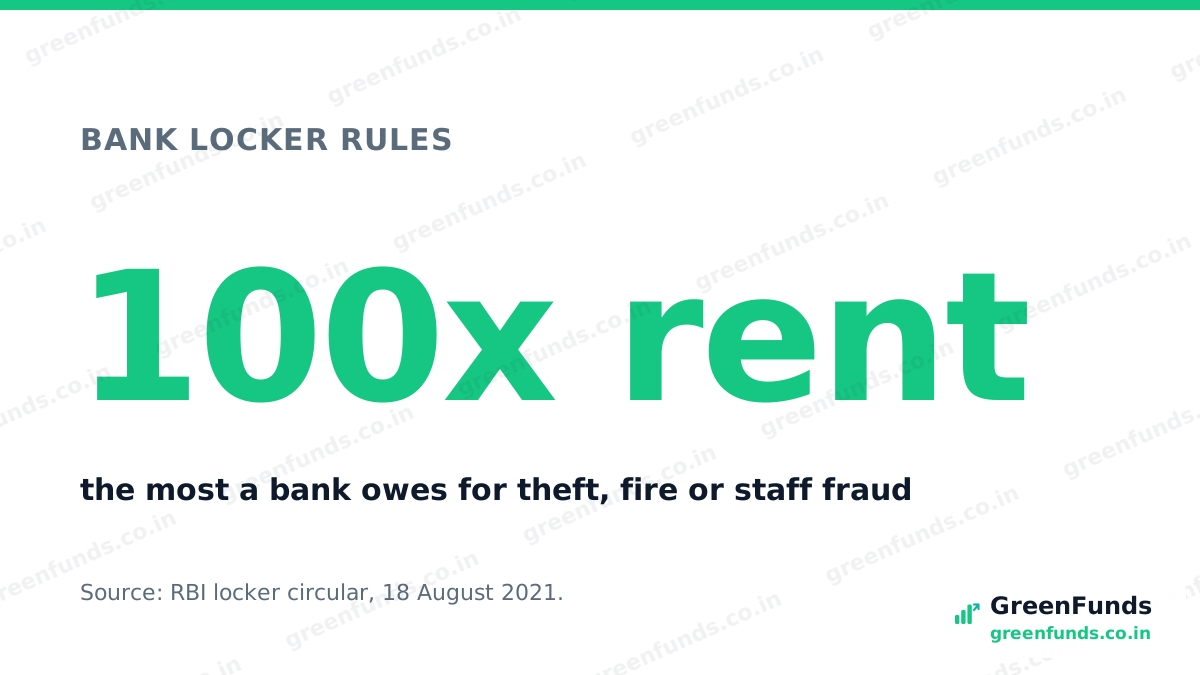
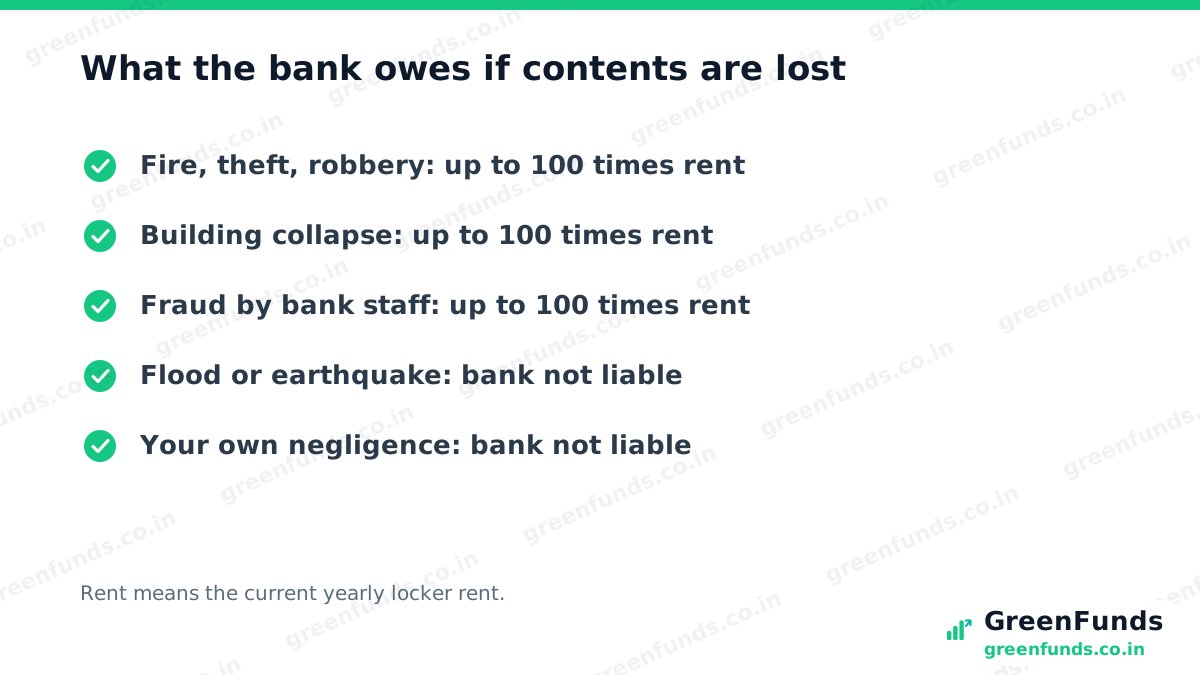
The 100 times rule. If your locker contents are lost to fire, theft, burglary, dacoity, robbery or building collapse, or to fraud by a bank employee, the bank pays up to 100 times the locker’s current yearly rent. That’s a cap, not a promise of what your contents are worth.
An illustration. Say your locker rent is 4,000 rupees a year. The most the bank owes after a theft is 4 lakh rupees. If the locker held gold worth 10 lakh rupees, the gap is yours. The bank doesn’t know what’s inside, and it doesn’t insure the contents for you.
Natural calamities. The bank isn’t liable for loss from floods, earthquakes or other acts of God. It must still take reasonable care to protect its premises.
Your rights as a locker holder
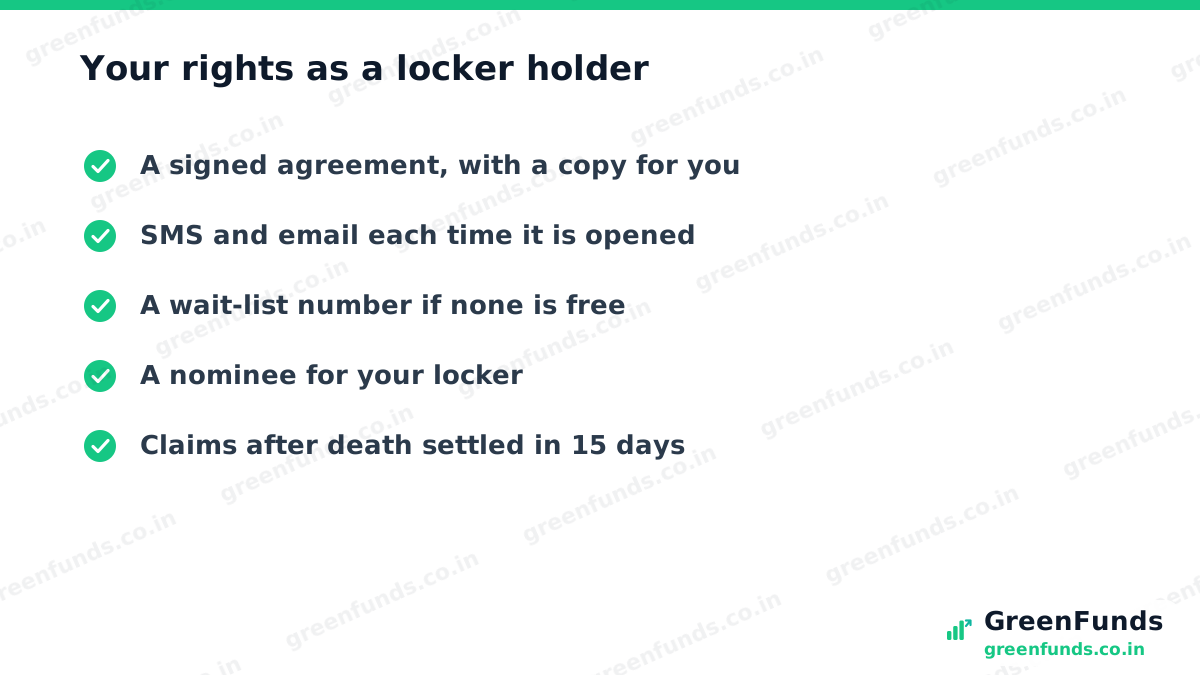
- A written agreement. The bank signs a locker agreement with you on stamped paper, and you get a copy. It can be based on the model agreement from the Indian Banks’ Association.
- Alerts on every access. The bank must send an SMS and email to your registered contacts, the same day, each time your locker is operated.
- CCTV. Banks may record the strong room’s entry and exit, and keep the footage for at least 180 days.
- A fair queue. Banks keep a branch-wise list of free lockers. If none is free, you get a wait-list number.
- A nominee. You can name a nominee for your locker. After the holder dies, banks should settle claims within 15 days of receiving them.
Rent, deposits and unpaid dues
For a new locker, the bank may ask for a term deposit that covers three years’ rent and the cost of breaking the locker open if needed. It can’t demand this from existing holders, or from customers with a satisfactory running account. If rent goes unpaid for three years in a row, the bank can break the locker open after following due process.
Before you rent one. Read the agreement. Keep the rent paid. Name a nominee. And keep a private list of what’s inside, with photos and bills for gold, since the bank’s cap may not cover the full value. Your bank needs your KYC on file to give you a locker.
Watch the alerts. If you get a locker access SMS you didn’t make, call your branch at once. And if a caller claiming to be your bank asks for an OTP to “update your locker”, hang up: it’s a scam. Here’s how to file a cyber crime complaint.
RBI consolidated many of its bank rules into new directions in 2025, so check the current text on rbi.org.in. More to read: your deposits are insured up to 5 lakh, gold hallmark and HUID, and what a bank locker is in one line.
Questions people ask
Is the bank liable if my locker is robbed?
Yes, within a cap. Under RBI's 2021 locker rules, if contents are lost to fire, theft, burglary, dacoity, robbery, building collapse, or fraud by bank staff, the bank owes up to 100 times the locker's current yearly rent.
Is the bank liable for locker damage in a flood or earthquake?
No. RBI's rules say the bank isn't liable for loss from natural calamities or acts of God. But the bank must take care to protect its premises from such events.
Can a bank ask for a fixed deposit to give me a locker?
For a new locker, a bank may ask for a term deposit covering three years' rent and the charges for breaking open the locker if needed. It can't ask existing locker holders, or customers with a satisfactory running account, for this.
What happens to a bank locker after the holder dies?
The nominee can claim access. RBI's rules ask banks to settle such claims within 15 days of receiving the claim, with proof of death and the nominee's identity.
Source: RBI circular RBI/2021-2022/86, DOR.LEG.REC/40/09.07.005/2021-22, 18 August 2021, Safe Deposit Locker and Safe Custody Article Facility provided by banks, effective 1 January 2022 (rbi.org.in). RBI has since consolidated many bank rules into 2025 directions; check rbi.org.in for the current text.
Found this useful? You can buy us a coffee. It keeps GreenFunds free.Flag a possible issue
Was this helpful?
Thanks for the signal.
Comments
Share your experience or a question. Be kind, stay on topic. This is reader discussion, not financial advice.
No comments yet. Be the first to share.