RBI raised the repo rate: what it means for your EMI
Floating loan rates follow the repo rate, so your EMI or loan length can rise
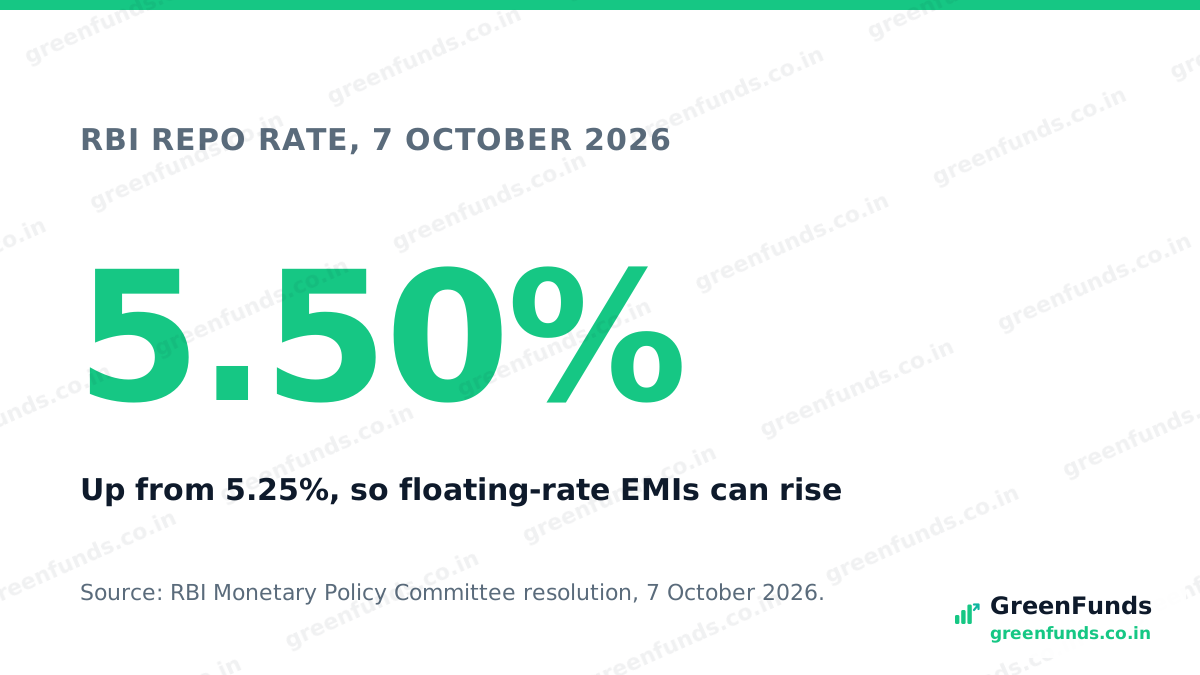
The repo rate is the interest rate at which the Reserve Bank of India (RBI) lends to banks. When it rises, borrowing gets costlier for everyone down the line, including you. In October 2026, it rose.
What happened. On 7 October 2026, RBI’s Monetary Policy Committee raised the repo rate from 5.25% to 5.50%. It also changed its stance to “calibrated tightening”, and said rate cuts are off the table in the near term. RBI expects inflation of 5.2% this year, and a higher rate is its tool to cool prices.
Why it matters to you. If you have a floating-rate home loan, car loan or personal loan, its rate can now rise. That means a bigger EMI, or the same EMI for more months. If you save in fixed deposits, new deposits may start paying a little more.
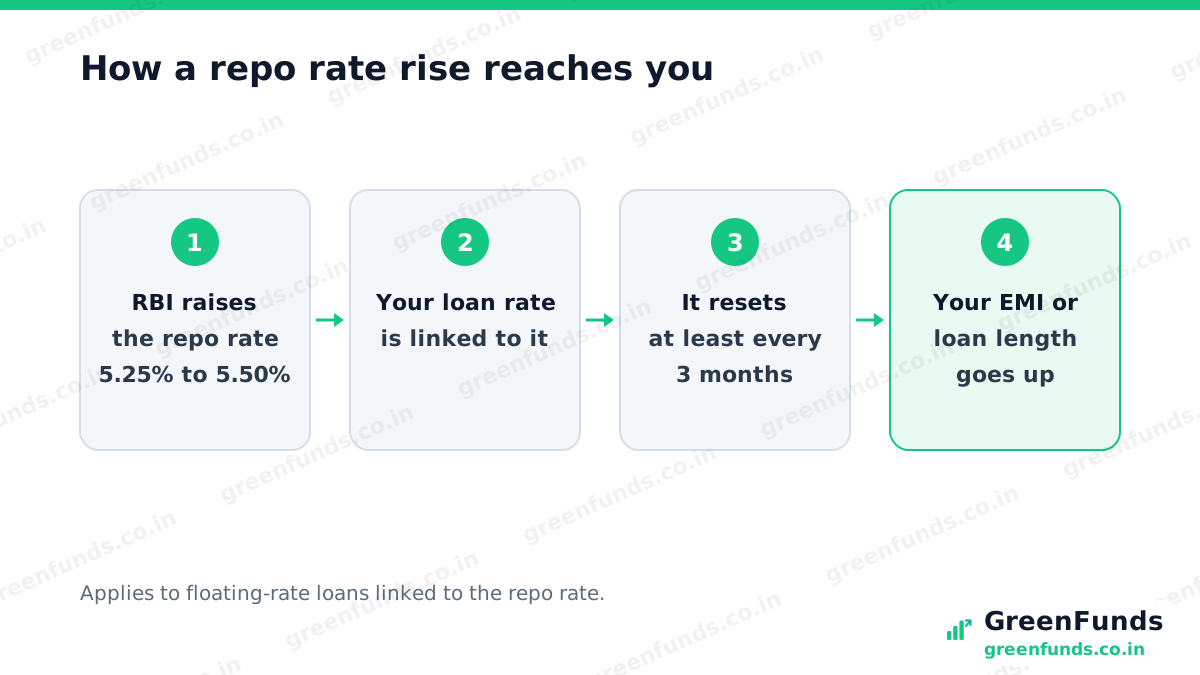
How it reaches your loan. Since October 2019, RBI has required banks to link new floating-rate retail loans to an outside benchmark, and the repo rate is the one many use. Your rate is that benchmark plus a margin, and it must reset at least once every three months. So a repo rise shows up in your loan within a quarter.
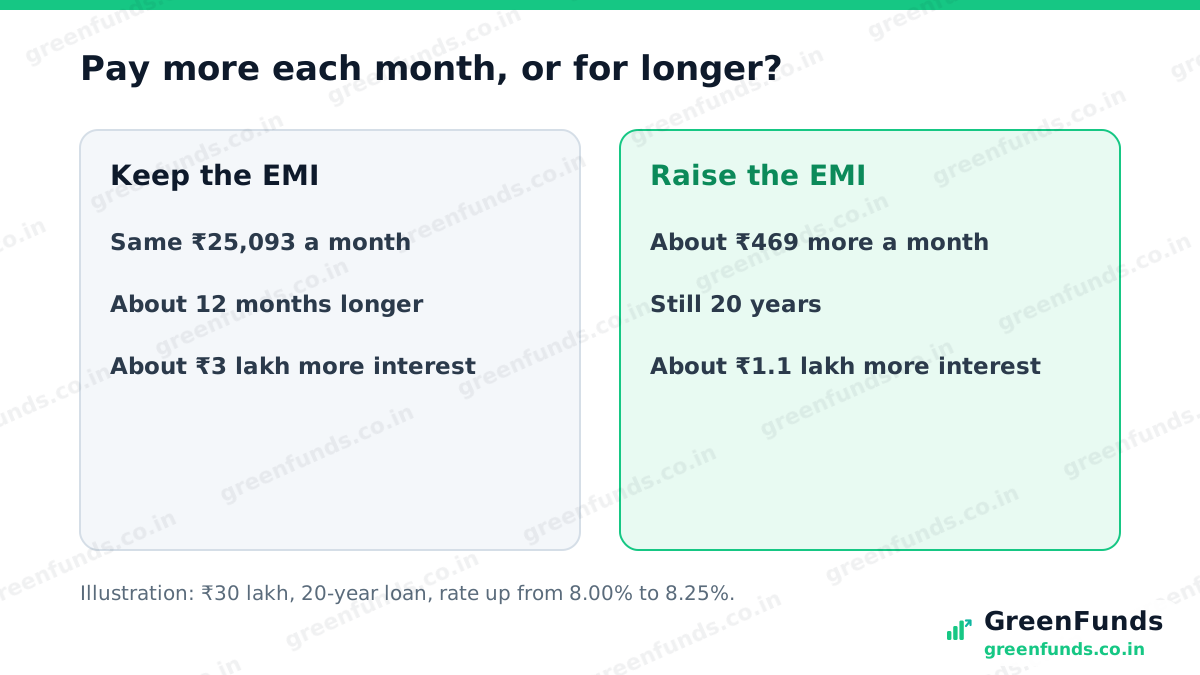
What it costs, in rupees. Take an illustration: a ₹30 lakh home loan over 20 years at 8.00%. The EMI is about ₹25,093. If the rate moves to 8.25%, the EMI rises to about ₹25,562, roughly ₹469 more a month. Over 20 years, that adds about ₹1.1 lakh in interest.
You get a choice. RBI rules make your lender offer a higher EMI, a longer loan, or a mix of both. Keeping the EMI at ₹25,093 sounds painless, but in this illustration it stretches the loan by about 12 months and adds about ₹3 lakh in interest. A longer loan costs more because you pay interest for longer.
Not every loan moves. A fixed-rate loan stays the same. Older loans linked to a bank’s own benchmark, such as MCLR, follow their own reset dates and can move more slowly. Your lender must send you a statement every quarter showing your EMI and how many are left.
What about your FD? Banks often raise fixed deposit rates after a hike, but they don’t have to, and each bank sets its own. A rate already locked on an existing deposit won’t change. Only new deposits and renewals get the new rate.
What to do now. Check your loan letter for the benchmark and the next reset date. If you can afford it, raising the EMI is usually cheaper than stretching the loan. And if you have spare cash, a part prepayment cuts the interest at the source. RBI meets again on 2 to 4 December 2026, so rates can move again.
More to read: home loan basics, FD vs debt fund, and how inflation shrinks the value of money.
Questions people ask
What did RBI decide in October 2026?
On 7 October 2026, RBI's Monetary Policy Committee raised the repo rate by 0.25 percentage points, from 5.25% to 5.50%. It also changed its stance to calibrated tightening, which signals that rate cuts are off the table for now. The next meeting is on 2 to 4 December 2026.
Will my home loan EMI go up after the repo rate hike?
If your loan has a floating rate linked to the repo rate, yes, at its next reset. RBI rules require these rates to reset at least once every three months. Fixed-rate loans do not change. Loans linked to a bank's own benchmark, such as MCLR, follow their own reset dates.
Can I keep my EMI the same when the rate rises?
Usually, yes. RBI rules require your lender to let you choose a higher EMI, a longer tenure, or a mix of both, and to let you prepay. A longer tenure keeps the monthly amount steady but costs more interest overall.
Will FD rates go up after the repo rate hike?
They often do, but banks are not required to raise them, and each bank decides its own rates and timing. A rate already locked on an existing fixed deposit does not change. Only new deposits and renewals get the new rate.
Source: RBI Monetary Policy Committee resolution, 7 October 2026 (rbi.org.in); RBI circular on external benchmark based lending, 4 September 2019; RBI circular on reset of floating interest rates on EMI loans, 18 August 2023, as updated 1 October 2025. Rates change, check rbi.org.in and your lender.
Found this useful? You can buy us a coffee. It keeps GreenFunds free.Flag a possible issue
Was this helpful?
Thanks for the signal.
Comments
Share your experience or a question. Be kind, stay on topic. This is reader discussion, not financial advice.
No comments yet. Be the first to share.