The fake customer care number scam: why you should never search for a helpline
The number at the top of search can be the scammer's
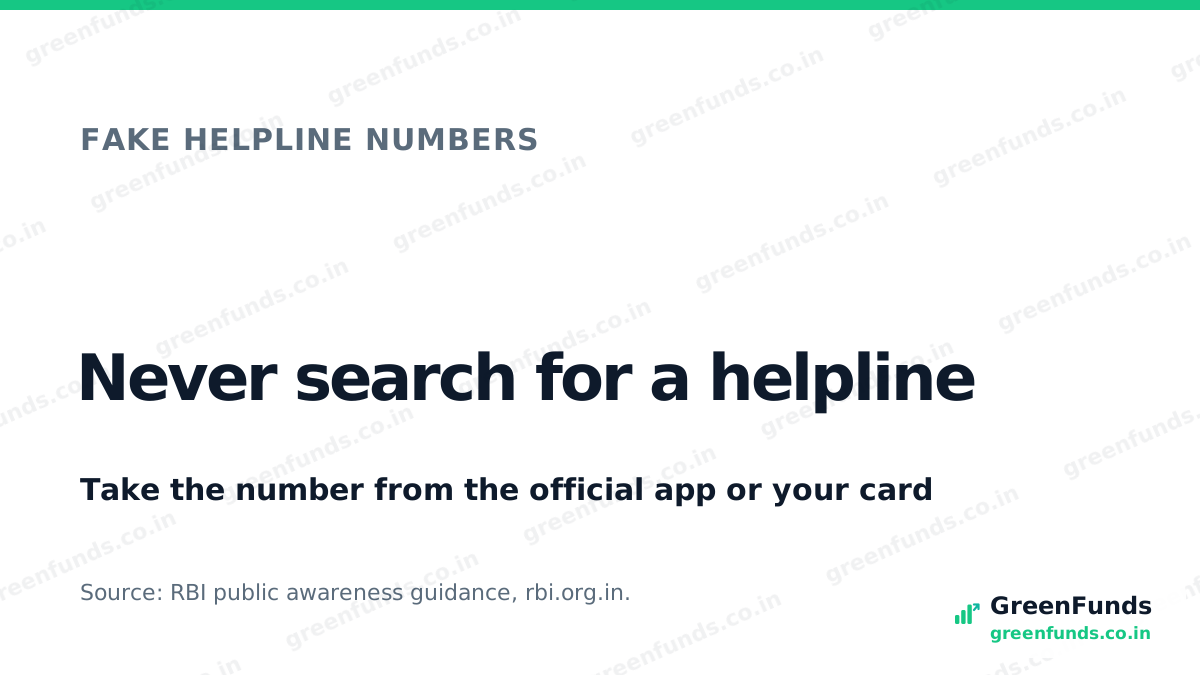
The fake customer care number scam is simple: a scammer puts their own phone number where you will look for a company’s helpline. You search, you call, and the friendly “agent” on the line is the scammer. They then walk you, step by step, into handing over your money.
How the number gets there. Scammers list fake helplines for banks, payment apps, airlines and delivery companies on search results, paid ads, map listings, social media posts and lookalike websites. People search for a number exactly when they are worried, after a failed payment, a missing refund or a blocked card. That is the moment the trap works best.
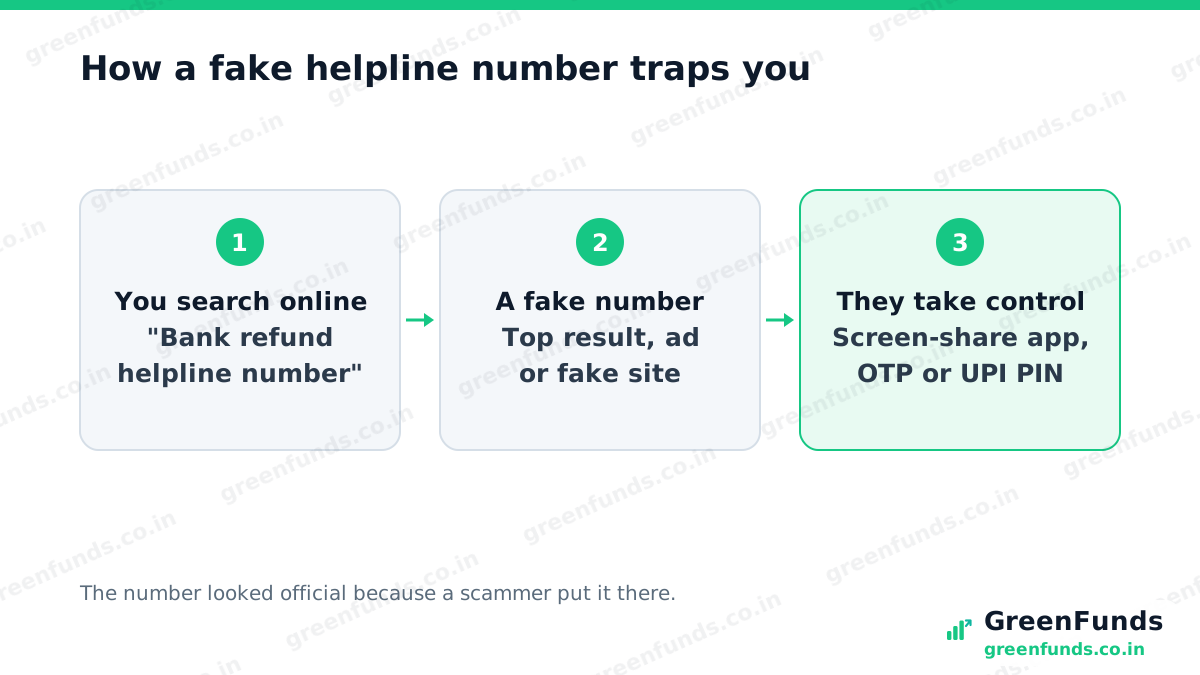
What the “agent” asks for. Once you are on the call, they sound helpful and urgent. They may ask you to share an OTP, enter your UPI PIN “to receive the refund”, scan a QR code, or install a screen-sharing app so they can “fix it for you”. Any of these gives them the keys. With a screen-sharing app, they can watch you type your PIN. Say you were owed a Rs 1,200 refund: you can end up losing Rs 40,000 instead. (An illustration of the pattern.)
Did you know? RBI awareness material warns that people looking up bank or company contact numbers on search engines can land on unverified numbers, and advises taking contact details only from official sources. RBI also repeats that you should never share your PIN, OTP or password with anyone. And a UPI PIN is never needed to receive money, only to send it. Source: RBI, rbi.org.in. Check the latest guidance there.
Real support versus a fake one. The differences are easy to spot once you know them.
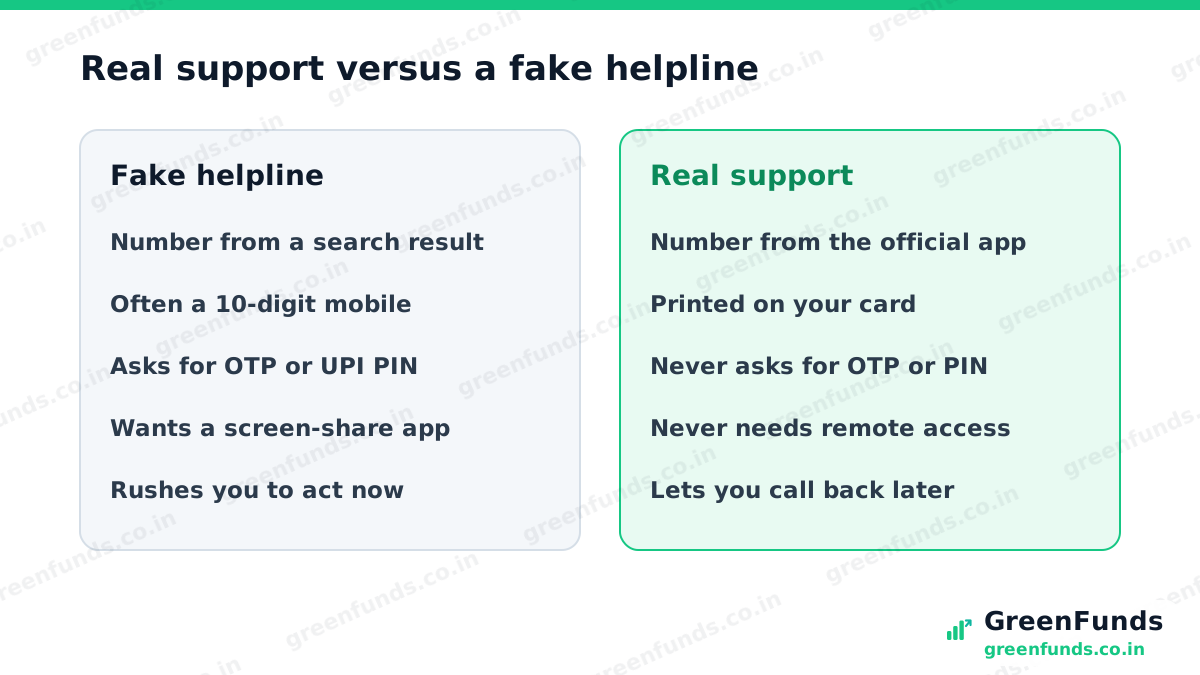
Find the number the safe way. Use the help section inside the company’s own app. Type the official website address yourself rather than clicking an ad. For your bank, use the number on the back of your debit or credit card, or on your passbook. If a caller pressures you, hang up and call back on a number you found yourself. A real agent will not mind.
If it has already happened. Uninstall any screen-sharing app they made you install, and call your bank to block your cards and UPI. Call 1930 and file at cybercrime.gov.in quickly. Our guide on how to report a UPI fraud has the steps. The same “urgent help” script is used in voice call scams of every kind.
The takeaway. A search result is not proof that a number is real. Get helpline numbers only from the official app, website or your card, and never share an OTP or PIN or install an app because a caller asked.
More on staying safe: safe habits on UPI, your UPI PIN is never for receiving money, and SIM swap fraud.
Questions people ask
How does the fake customer care number scam work?
Scammers post fake helpline numbers for banks, apps, airlines and delivery companies on search results, paid ads, social media and copycat websites. When you call about a refund, a failed payment or a blocked account, the 'agent' asks you to share an OTP or UPI PIN, scan a QR code, or install a screen-sharing app, and then uses that access to take your money.
Where can I find a company's real customer care number?
From the company's own app, its official website typed in directly, the back of your debit or credit card, or your bank passbook or statement. Do not trust a number just because it appears at the top of a search result or in an ad.
Will a real bank ever ask for my OTP or UPI PIN?
No. A genuine bank or payment app will never ask for your OTP, UPI PIN, card PIN, CVV or password, and will never ask you to install a screen-sharing app. Anyone who asks for these is a scammer, even if they know your name and account details.
Do I need my UPI PIN to receive a refund?
No. You never enter your UPI PIN to receive money. A PIN is only for sending money. If a 'refund' needs your PIN, it is a scam that will take money from you.
Source: RBI public awareness guidance on not sharing OTP, PIN or card details and on taking contact details only from official sources (rbi.org.in); National Cyber Crime Reporting Portal (cybercrime.gov.in). Check the latest advisories.
Found this useful? You can buy us a coffee. It keeps GreenFunds free.Flag a possible issue
Was this helpful?
Thanks for the signal.
Comments
Share your experience or a question. Be kind, stay on topic. This is reader discussion, not financial advice.
No comments yet. Be the first to share.