ELSS: the tax saver mutual fund, its 3-year lock-in, and who it suits
An equity mutual fund with a 3-year lock-in that counts towards the 1.5 lakh rupee deduction on the old regime
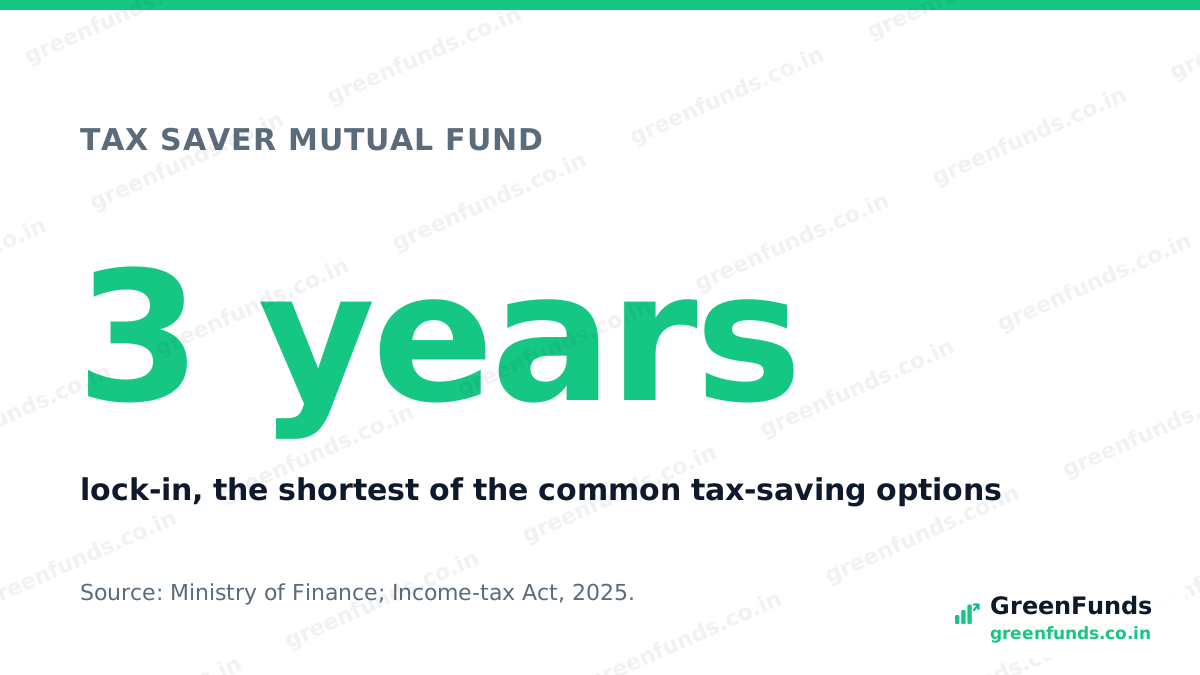
ELSS, the equity linked savings scheme, is a mutual fund with two special features. It invests mainly in shares, and it locks your money for 3 years. In return, on the old tax regime, what you invest can lower your taxable income. Since SEBI’s 2026 rules, these funds are named “ELSS tax saver funds”.
The tax benefit. Investments in ELSS count towards the yearly deduction of up to 1.5 lakh rupees long known as section 80C, now section 123 of the Income-tax Act, 2025. It works only if you file under the old regime. The limit is shared with your EPF, PPF, life insurance premiums, children’s tuition fees and home loan principal, so add those up first.
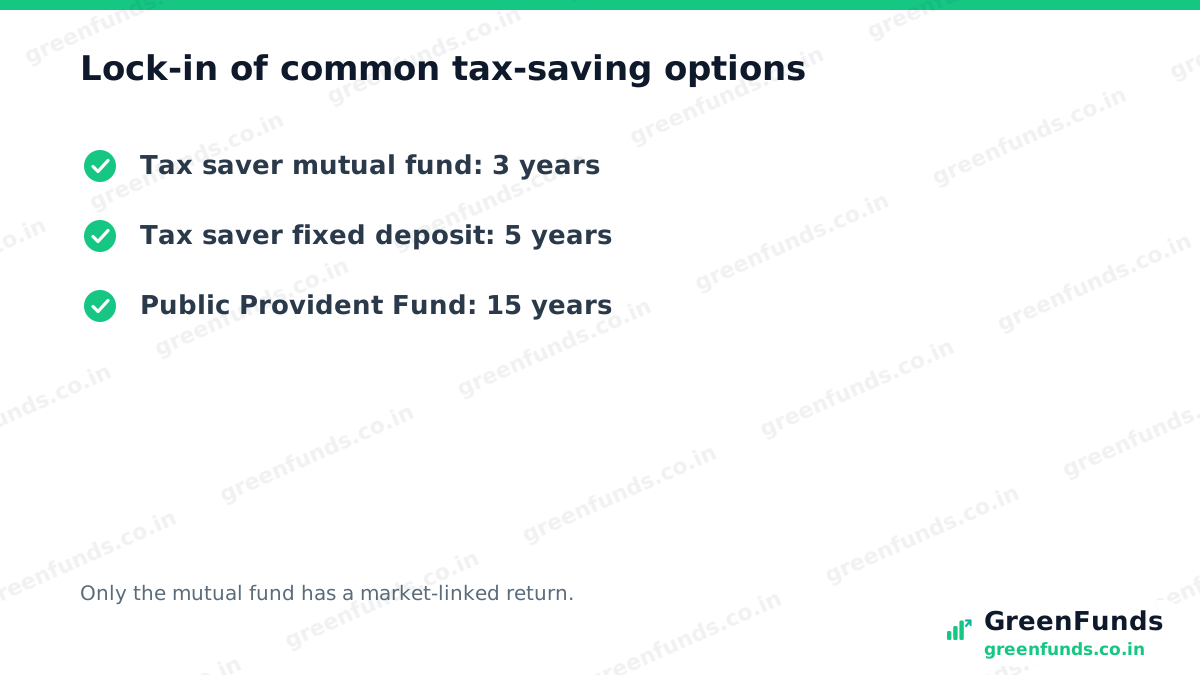
The shortest lock-in among the common options. ELSS locks your money for 3 years. A tax saver FD locks it for 5, and PPF runs for 15. That is ELSS’s main advantage over the others. The trade-off: its value moves with the stock market, and nothing is guaranteed.
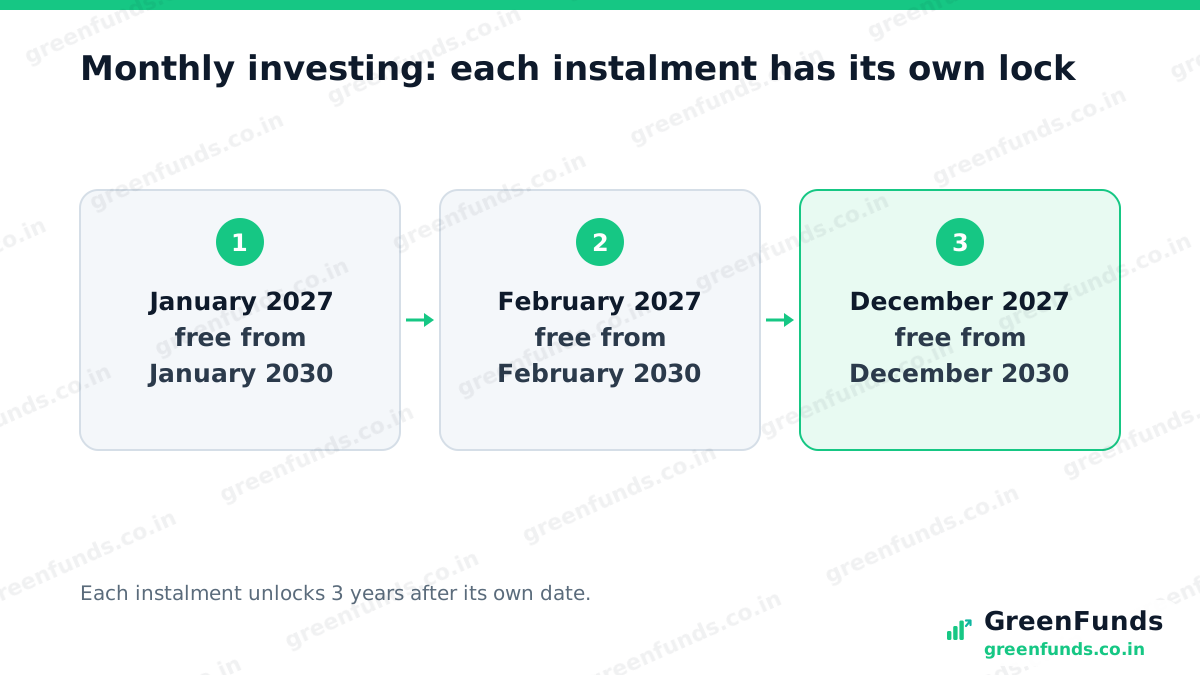
How the lock-in works for a SIP. This catches many people out. Every SIP instalment is locked for 3 years from its own date. Invest 5,000 rupees a month from January 2027, and the January 2027 instalment is free in January 2030, the February one in February 2030, and so on. Three years after your first SIP, only the first instalment can be taken out.
What you save, in rupees. Investing the full 1.5 lakh rupees can cut your tax for the year by up to ₹46,800 at the 30% slab, ₹31,200 at 20%, or ₹7,800 at 5%, counting the 4% cess. These are the most you can save. If EPF and insurance already fill your limit, ELSS saves you nothing extra.
How the gains are taxed. Because every unit is held for at least 3 years, any profit when you sell is a long-term capital gain. Long-term gains from equity funds are tax-free up to 1.25 lakh rupees a year, counted across all your equity investments, and taxed at 12.5% above that. Say you sell ELSS units with a gain of 2 lakh rupees and have no other equity gains that year: tax is 12.5% of ₹75,000, which is ₹9,375, plus cess.
Did you know? Picking the direct plan of an ELSS fund, rather than the regular plan, can make a real difference over time, because the direct plan pays no distributor commission. Our guide to direct vs regular plans shows how much a 1% yearly difference adds up to.
Who ELSS suits. Someone on the old regime, with room left in the 1.5 lakh rupee limit, who is comfortable with the stock market’s ups and downs and won’t need the money for at least 3 years, ideally longer. Investing through a monthly SIP spreads your purchases across the year instead of rushing a lump sum in March.
Who should skip it. Anyone on the new regime who wants it only for tax, since there is no deduction there. And anyone who can’t stomach seeing their tax-saving money fall in value for a while: a tax saver FD or PPF gives a fixed return instead. Our ELSS vs PPF vs FD guide lays all three side by side.
The takeaway. ELSS is the only common tax-saving option with an equity return and a 3-year lock-in. Check your regime and your remaining limit first, start early in the year through a SIP, and remember that each instalment has its own 3-year clock. See what a monthly amount could build with our SIP calculator.
More to read: old vs new tax regime, how mutual fund gains are taxed, and types of mutual funds.
Questions people ask
What is ELSS?
ELSS stands for equity linked savings scheme, now called an ELSS tax saver fund. It is a mutual fund that invests mostly in shares, at least 80% under SEBI's rules, and locks your money for 3 years. On the old tax regime, what you invest counts towards the 1.5 lakh rupee yearly deduction.
How does the ELSS lock-in work for a SIP?
Each SIP instalment has its own 3-year lock-in, counted from the date it was invested. So if you start a monthly SIP in January 2027, the January instalment unlocks in January 2030, the February one in February 2030, and so on. You cannot take out the whole amount 3 years after your first SIP.
Is ELSS useful on the new tax regime?
Not for tax. The new regime does not allow this deduction. On the new regime, an ELSS fund is simply an equity fund with a 3-year lock-in. If you want an equity fund without the lock-in, a regular flexi-cap or index fund gives you the same kind of investment with more freedom.
How are ELSS returns taxed?
Since every ELSS unit is held for at least 3 years, any gain is a long-term capital gain. Long-term gains from equity funds are tax-free up to 1.25 lakh rupees a year across all your equity investments, and taxed at 12.5% above that, plus cess.
Do I have to sell my ELSS after 3 years?
No. The lock-in sets the earliest date you can sell, not a date you must sell. You can stay invested as long as you like, and the money keeps moving with the market.
Source: Equity Linked Savings Scheme, 2005 (Ministry of Finance) for the 3-year lock-in; SEBI circular on categorisation and rationalisation of mutual fund schemes, 26 February 2026 (ELSS-Tax Saver Fund, at least 80% in equity), as reported; Income-tax Act, 2025 (section 123 and Schedule XV, the deduction long known as section 80C), in force 1 April 2026; equity capital gains at 12.5% above 1.25 lakh rupees a year, per the Finance (No. 2) Act, 2024, unchanged in Budget 2026. Rules change, check incometax.gov.in and sebi.gov.in.
Found this useful? You can buy us a coffee. It keeps GreenFunds free.Flag a possible issue
Was this helpful?
Thanks for the signal.
Comments
Share your experience or a question. Be kind, stay on topic. This is reader discussion, not financial advice.
No comments yet. Be the first to share.