How to improve your credit score: the levers that work
Pay on time and lean lightly on credit; the rest follows

A credit score is just a lender’s shorthand for one question: how reliably do you repay? So improving it is not about tricks; it is about showing, month after month, that you pay on time and do not lean too hard on borrowed money. A few habits move it, a few hurt it, and the rest is patience.
The levers that actually work. If you do nothing else, pay every bill on time. Repayment history is the heart of a credit score, and a single missed payment can undo months of good behaviour.
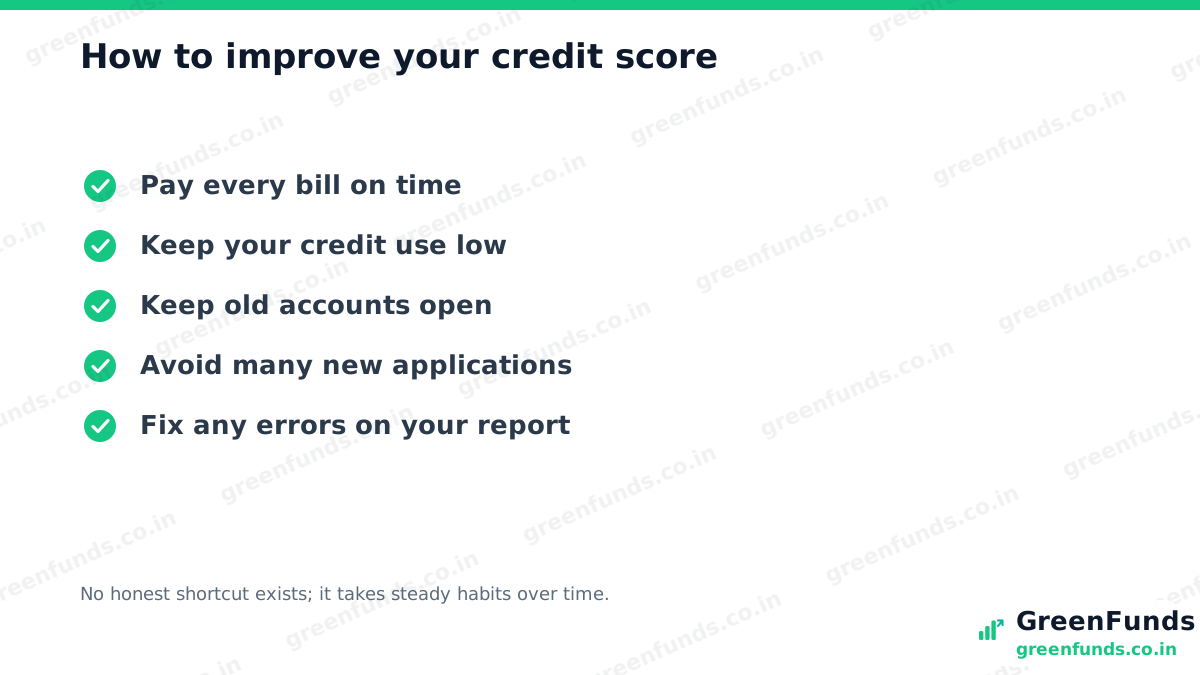
Why credit use matters. Using most of your available limit, called high credit utilisation, signals stress to a lender, even if you pay it off. If your card limit is one lakh rupees and you routinely spend seventy thousand, that high usage can weigh on your score. Keeping usage low, often advised to stay well below a third of your limit, generally helps. Paying before the statement date, or spreading spends across cards, can bring it down.
Did you know? The single most powerful lever is simply paying on time, every time. No bureau publishes its exact formula, so be very wary of any service that quotes precise “factor weights” or promises to boost your score overnight; that is a common scam. Steady, on-time repayment is the real method.
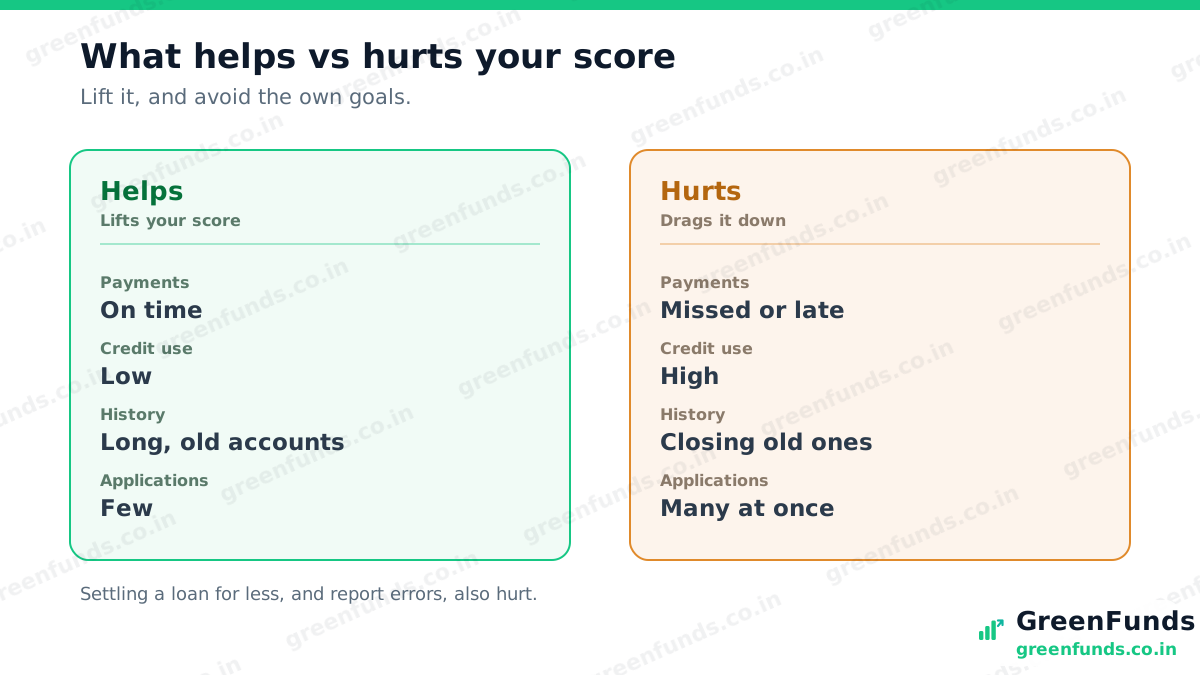
What drags it down. Just as some habits lift the score, others pull it down. Knowing them helps you avoid the own goals.
Fix errors, and be patient. Pull your credit report (you get it free) and check for mistakes: a loan you never took, a payment wrongly marked late, an account that should be closed. Disputing those can lift your score sooner than anything else. For the rest, give it time; because the score reflects a pattern, real improvement usually takes several months of good habits.
The takeaway. Pay on time, keep your credit use low, keep old accounts open, apply sparingly, and fix report errors. Do that steadily and your score rises; no honest shortcut exists, and anyone promising an instant boost is best avoided.
More in this cluster: your credit score, explained, how to check your credit report free, and the credit cards hub.
Questions people ask
How can I improve my credit score?
The biggest lever is paying every loan and credit card bill on time, every time. Beyond that: keep your credit usage low relative to your limit, avoid applying for lots of new credit at once, keep older accounts open to show a long history, and fix any errors on your report. There is no instant trick; it is steady, responsible behaviour over time.
What hurts your credit score the most?
Missing or delaying payments hurts the most, because repayment history is the heart of a credit score. Other things that drag it down include using most of your available credit, applying for many loans or cards in a short span, and errors on your report such as a loan wrongly shown as unpaid. Settling a loan for less than the full amount can also leave a mark.
What is credit utilisation and why does it matter?
Credit utilisation is how much of your available credit limit you are using. If your card limit is 1 lakh rupees and you have spent 70,000, your utilisation is 70%. Lenders read high utilisation as a sign of stress, so keeping it low, often advised to stay well below a third of your limit, generally helps your score. Spreading spends or paying before the statement date can lower it.
How long does it take to improve a credit score?
There is no overnight fix. Because the score reflects a pattern of behaviour over time, meaningful improvement usually takes several months of on-time payments and low utilisation. Fixing an error on your report can help sooner. Be wary of anyone promising to boost your score instantly; that is a common scam.
Source: General credit-scoring principles. The exact scoring formula of each bureau (such as CIBIL) is not public, so avoid any source that quotes precise factor weights. Verify specifics with the bureau.
Flag a possible issue
Was this helpful?
Thanks for the signal.
Comments
Share your experience or a question. Be kind, stay on topic. This is reader discussion, not financial advice.
No comments yet. Be the first to share.