Active vs passive investing
Beat the market, or just match it
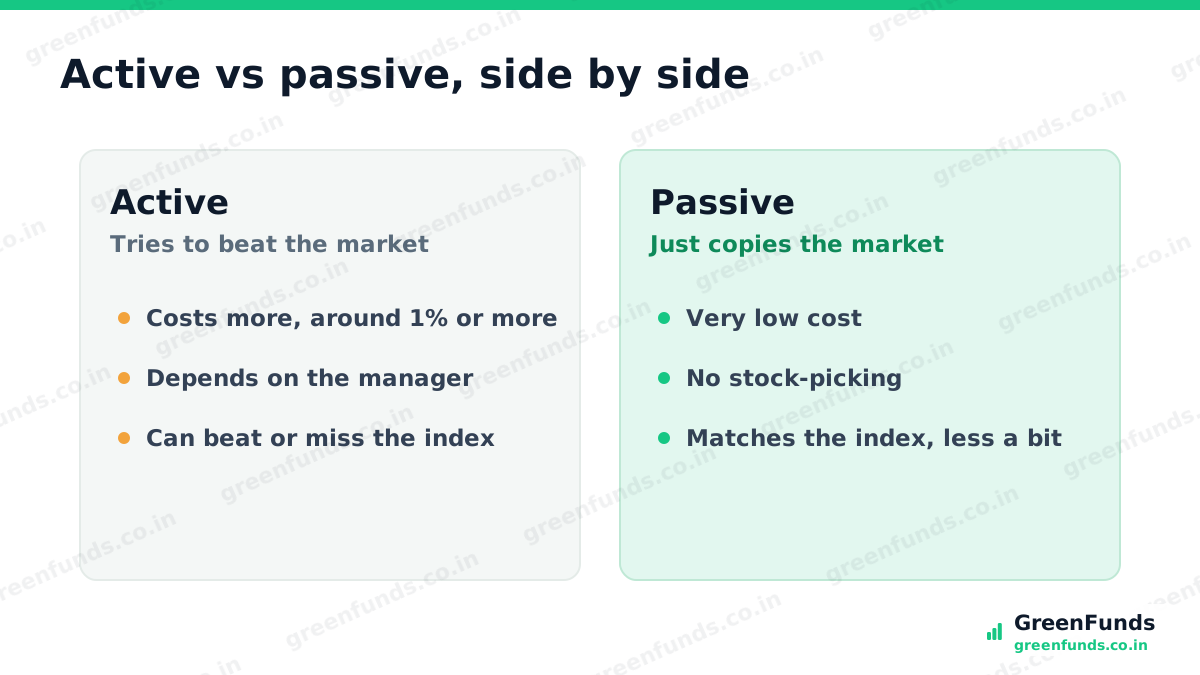
There are two basic ways to invest in the market. Active means paying an expert to pick shares and try to beat the market. Passive means simply copying the whole market and matching it, at a much lower cost. That one choice shapes how much you pay, and often how much you are left with.
The two approaches
- Active. A manager and a research team pick stocks, time their moves, and try to beat a benchmark like the Nifty 50. You pay more for that effort.
- Passive. The fund simply holds the whole index in the same proportions. No stock-picking, so it just earns the market return, minus a very small fee. This is what an index fund does.
Active bets on skill. Passive settles for the market, cheaply. The question is whether the skill is worth the price.
What the long-run data shows
Mostly, it has not been. S&P Dow Jones Indices publishes the SPIVA India Scorecard, which compares active funds against their benchmarks.
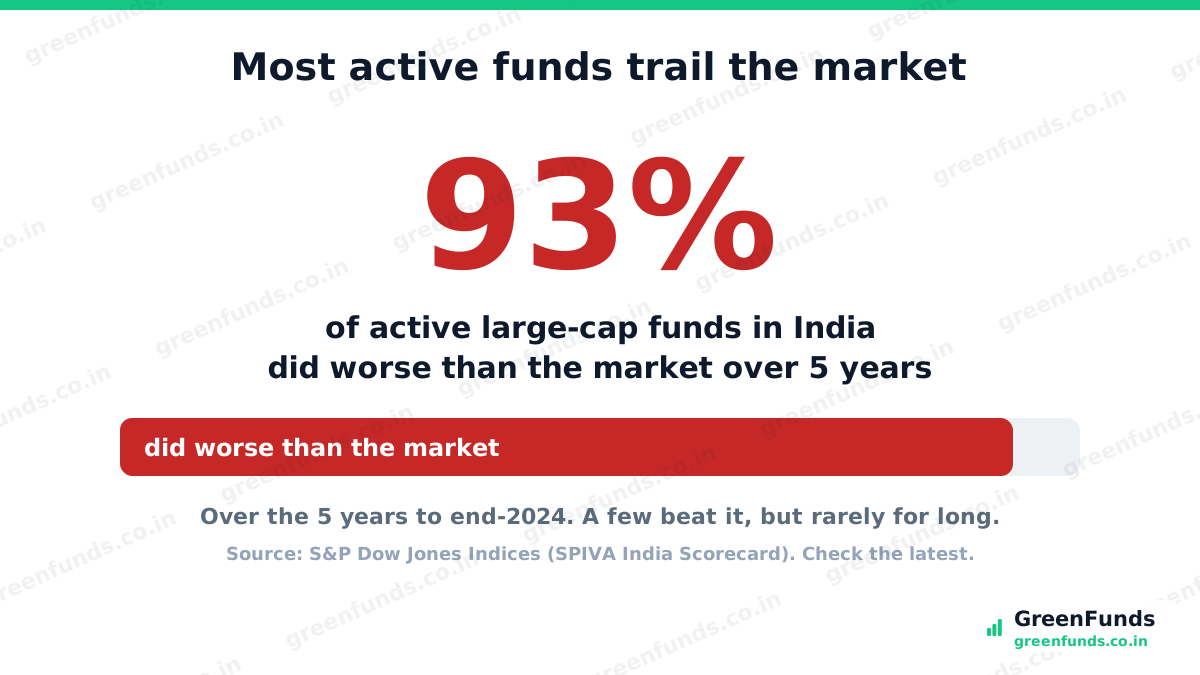
Over the five years to end-2024, about 93% of active large-cap funds in India did worse than the market they are measured against, per the SPIVA India Scorecard. A few beat it in any single year, but very few do it year after year, and the ones that will win next are hard to spot in advance. These figures update each period, so check the latest scorecard, but the pattern has held for a long time.
The cost gap that explains a lot
A big part of the story is fees. An active fund often charges around 1% or more a year; an index fund charges a small fraction of that. The manager has to beat the market by more than that extra fee just to draw level with it.
As compounding shows, that yearly gap snowballs. Over decades it can cost lakhs. The low, predictable cost is a large part of why passive investing holds up so well. See what one percent a year really costs you.
When active can still make sense
Passive is not the answer to everything.
- Less efficient corners of the market, like some small-cap or specialised areas, give a skilled manager more room to add value.
- A manager with a long, consistent record through good and bad markets, not just one hot year, may earn their fee.
- You want a specific strategy an index does not offer.
Even then, judge the fund on cost and a long track record, not last year’s chart.
How to choose
- Start passive for your core. A broad, low-cost index fund is a strong, simple base.
- Add active only with a reason. A clear edge or strategy, not a recent winning streak.
- Always check the cost. The direct plan of any fund costs less than the regular plan.
- Give it years. Both approaches need time; switching on every dip undoes the point.
Common mistakes
- Buying last year’s top active fund. Past winners rarely repeat.
- Ignoring the fee. A high expense ratio is a headwind every single year.
- Flipping between the two. Pick a sensible mix and let it run.
For most people, most of the time, a low-cost index fund as the core is hard to beat. Add active only where you have a real reason to.
Next, read what is an index fund, or start with SIP and mutual funds.
Questions people ask
What is the difference between active and passive investing?
Active investing pays a manager to pick holdings and try to beat the market. Passive investing just copies a market index, like the Nifty 50, at low cost. One bets on skill; the other settles for the market return cheaply.
Is passive investing better than active?
Not always, but it wins more often than people expect. Over the long run most active funds in India have trailed their index, and they cost more. For many investors a low-cost index fund is the simpler, stronger core.
Do active funds beat the index in India?
Some do in any given year, but few do it consistently. Over the five years to end-2024, about 93% of active large-cap funds trailed their benchmark, per the SPIVA India Scorecard. The hard part is picking the rare winner in advance.
Are passive funds safer?
They carry the same market risk, so they fall when the market falls. What they remove is manager risk, the chance your fund does much worse than the market because of bad stock picks. The cost is also lower and more predictable.
Should a beginner choose active or passive?
A low-cost index fund is an easy, sensible starting point: you buy the whole market without having to judge a manager. You can always add an active fund later if you have a clear reason, not just last year's returns.
Sources
- SPIVA India Scorecard, S&P Dow Jones Indices, Year-End 2024 Underperformance figures update each period; check the latest scorecard.