Needs vs wants, and lifestyle creep
Spend on needs, control wants, save the raise
A need is something you cannot live without, like rent, food or getting to work. A want is nice to have but optional, like eating out or the latest phone. Telling the two apart, and not letting your spending climb every time your pay does, is what quietly turns a salary into savings.
Needs vs wants
A need is something you genuinely cannot do without. A want is nice to have but optional.
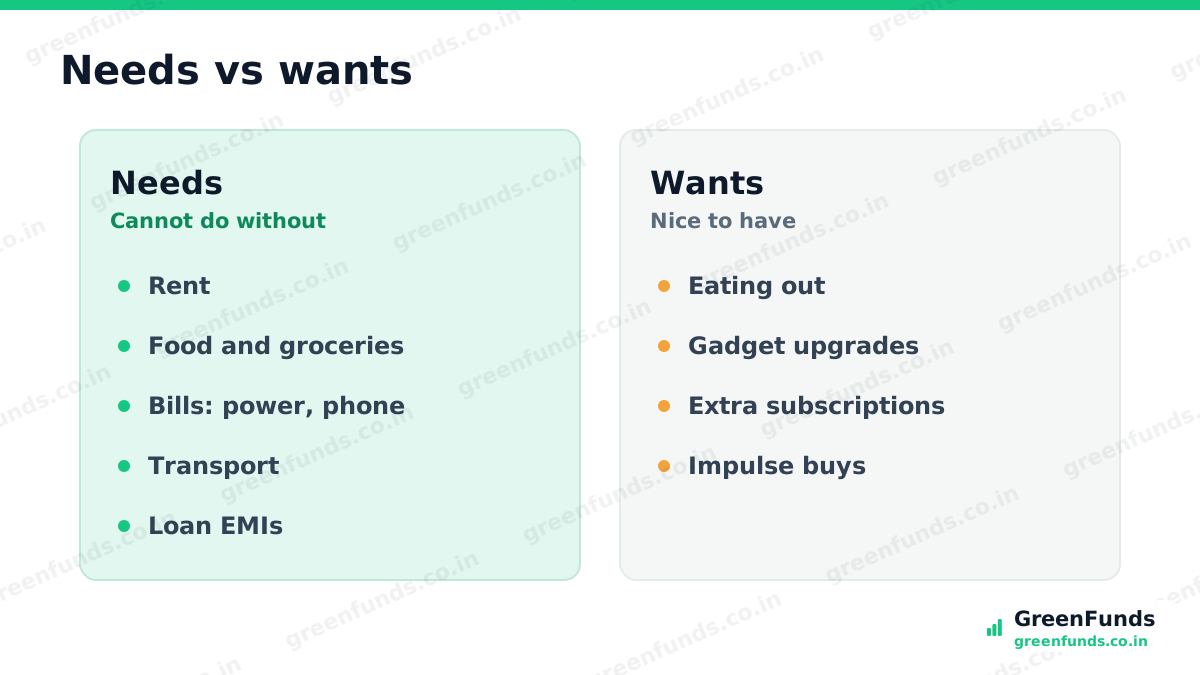
The tricky part: the same thing can be both. A phone is a need; the latest flagship is a want. Food is a need; a food-delivery habit is mostly a want. The test is simple. Ask, would my life actually break without this? If not, it is a want, and that is fine, as long as you know it.
Lifestyle creep: the silent trap
Here is the one that catches almost everyone. Your pay goes up, and so does your spending, step for step. A year later you earn much more and save no more. That is lifestyle creep, also called lifestyle inflation.
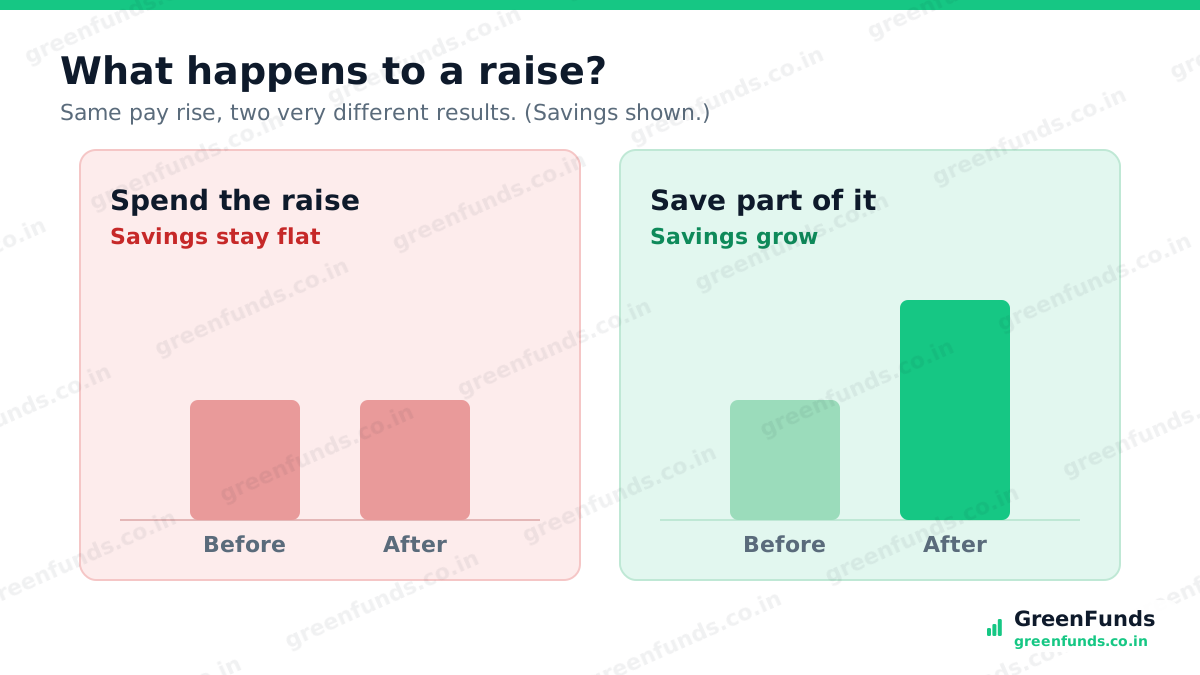
It feels harmless because every upgrade is small and deserved. But added up, a bigger salary that funds a bigger lifestyle leaves you exactly where you started, just with pricier habits that are hard to undo.
A rupee example
Say your pay rises from ₹40,000 to ₹60,000 a month, a ₹20,000 raise. Spend it all and your savings do not move. Instead, send ₹10,000 of that raise straight to your SIP and enjoy the other ₹10,000. You are saving ₹10,000 a month more than before and still living better. Same raise, completely different future.
How to beat it
- Save the raise first. When pay goes up, move a part into your SIP before you adjust to it. You never miss what you did not start spending.
- Automate saving. A fixed monthly transfer on salary day means saving is not a choice you re-make every month.
- Spend on wants on purpose. Pick the few that truly add joy, and skip the autopilot upgrades.
- Use a simple split. The 50/30/20 budget keeps needs, wants and savings in balance.
Common mistakes
- Upgrading everything at once after a raise. New phone, new plan, new habits, all at once, locks in higher costs.
- Treating wants as needs. Calling a subscription or a cab habit a need stops you from questioning it.
- Saving only what is left. Something is always left to spend. Save first, spend the rest.
You do not have to live cheaply forever. You just have to make sure that as you earn more, some of it goes to the person you will be in ten years, not only the one standing at the checkout today.
Next, set the split with the 50/30/20 budget, or build your emergency fund.
Questions people ask
What is the difference between needs and wants?
A need is something you cannot do without, like rent, food, bills, transport and loan EMIs. A want is nice to have but optional, like eating out, upgrades and subscriptions. The same thing can be a need at a basic level and a want above it.
What is lifestyle creep?
Also called lifestyle inflation, it is when your spending rises every time your income rises, so you save no more than before. A bigger salary feels good but builds no wealth, because the extra money quietly turns into bigger wants.
How do I avoid lifestyle creep?
Save a part of every raise before you get used to it. If your pay goes up, move a chunk straight into your SIP or savings, then live on the rest. You still enjoy some of the raise, but your future gets a share too.
Is it wrong to spend on wants?
No. Wants are part of a good life, and a budget with zero fun rarely lasts. The goal is to spend on wants on purpose and within a limit, not to cut them out. Problems start only when wants crowd out saving.
How much of my salary should go to wants?
A common guide is the 50/30/20 rule: about 50% to needs, 30% to wants and 20% to savings. Treat it as a starting point and adjust it to your own life and city.
Sources
- GreenFunds lesson, budgeting the 50/30/20 way The 50/30/20 split is a widely used guide, not a rule set by any regulator.