Large, mid and small cap are ranks, not opinions
The market-cap bands are defined by rank
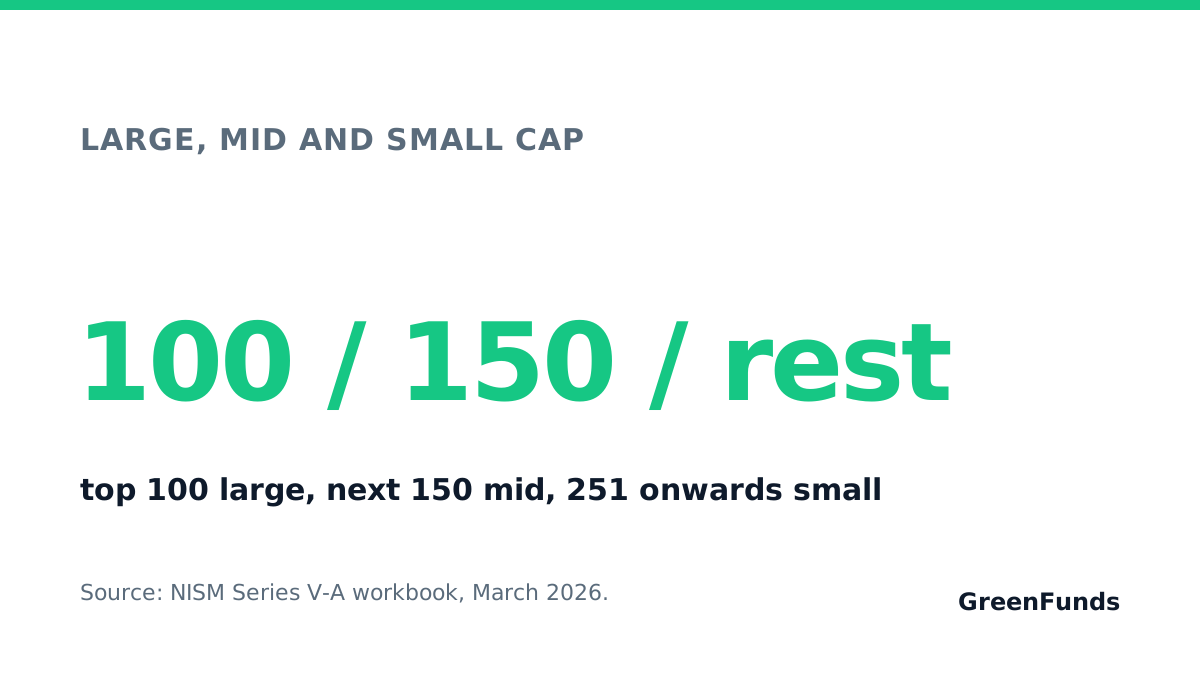
The definition. Companies are ranked by full market capitalisation, which is the share price multiplied by the number of shares. The largest 100 are large cap. The next 150, ranks 101 to 250, are mid cap. Everything from 251 onwards is small cap.
Why it is not a matter of opinion. The bands are fixed by rank, so a fund calling itself a mid-cap fund is telling you which slice of that list it must buy from. The label is a constraint, not a description.
What changes as you go down. More room to grow, and more volatility and business risk with it. A small company can double or halve in ways a very large one rarely does. Liquidity thins out too, which matters when a lot of people want out at once.
A rupee example. ₹10,000 in a large-cap fund and ₹10,000 in a small-cap fund are not the same bet. Over a bad year the second can move several times as far in either direction.
None of that makes small caps bad. It makes them a different holding period. Money you might need in two years does not belong there.
The list is not fixed. Rankings are reviewed periodically, so companies move between bands. A fund that must hold mid caps may have to sell a company that has grown into the large-cap list, whatever the manager thinks of it.
Why the labels were standardised. Before the bands were defined by rank, fund houses could describe almost anything as mid cap. Fixing the boundaries means the label on a scheme now tells you something checkable.
A practical way to use them. Match the band to how long the money can sit. Large caps for money you may need in a few years, mid and small only for money you can genuinely leave alone through a bad stretch, which can run several years rather than several months.
This is general education, not financial advice. Figures are as reported by the source and may change.
Source: NISM Series V-A workbook, March 2026 edition.
Ready to try your first ₹100? Open a free account.
Compare beginner friendly investing apps and open an account in a few minutes.
Compare apps →